Every Way of Getting Out in Cricket Explained
Bowled, caught, LBW, run out, stumped and the rare ones: every way a batter can be dismissed under the Laws of Cricket, with the current Law numbers.
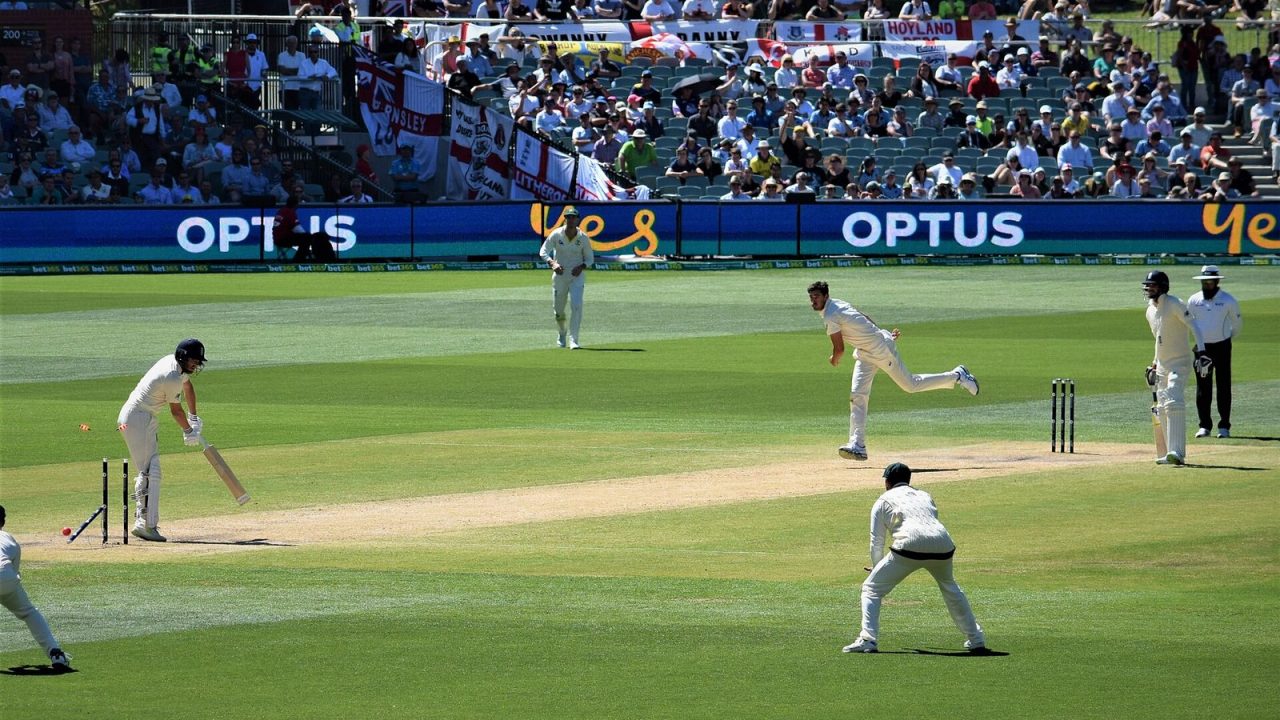
A cricket batter can be dismissed in more ways than most fans realise. Everyone knows bowled and caught, and most followers have argued about an LBW. But the Laws of Cricket also include dismissals so rare that many professional players never see one in their whole careers, from “hit the ball twice” to “timed out”.
This guide goes through every method of dismissal in the current Laws, maintained by the Marylebone Cricket Club (MCC), with the Law numbers from the 2017 Code. It explains what each one means, who gets the credit, and the details that trip people up.
The basics: appeals and who gets the credit
Before looking at individual dismissals, two general points help.
First, in almost every case the fielding side must appeal (traditionally “How’s that?”) for the umpire to give a batter out. If nobody appeals, the batter stays in, even if he is clearly out. A batter who knows he is out may also simply walk off.
Second, not every dismissal counts towards a bowler’s wickets. The bowler is credited when the dismissal is a direct result of his delivery (bowled, caught, LBW, stumped and hit wicket). For run outs, obstructing the field, hit the ball twice, timed out and retired out, no bowler gets the wicket. Scorecards record dismissals with abbreviations, which we explain in our guide to reading a cricket scorecard.
There is also an order of precedence when more than one dismissal could apply. Bowled takes precedence over every other method; caught takes precedence over everything except bowled; and stumped takes precedence over run out.
The common dismissals
Historically, a handful of methods account for the overwhelming majority of wickets. Wikipedia’s analysis of Test dismissals from 1877 to 2012 gives a sense of the balance:
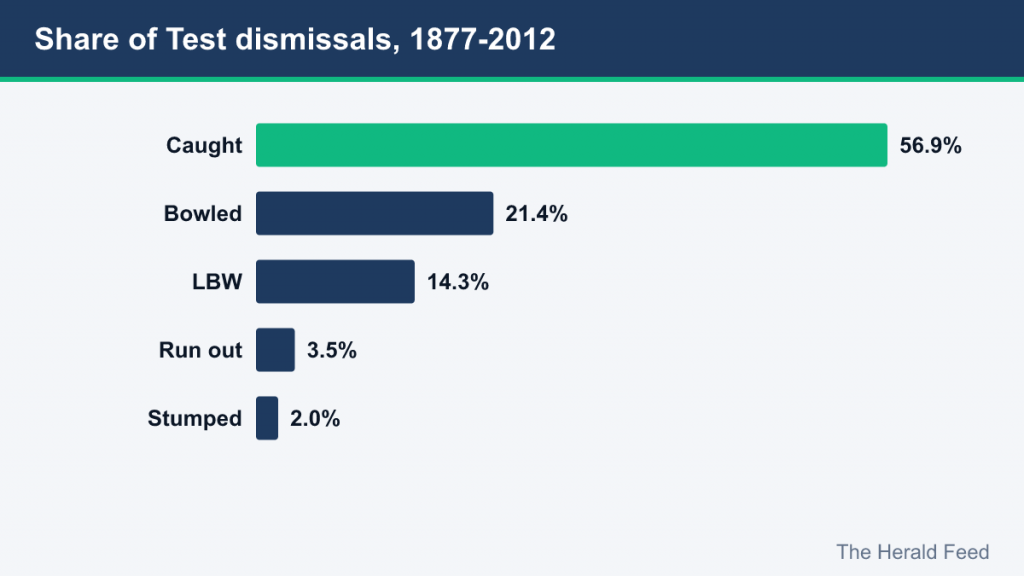
| Method | Law | Bowler credited? | Share of Test dismissals, 1877–2012 |
|---|---|---|---|
| Caught | 33 | Yes | 56.9% |
| Bowled | 32 | Yes | 21.4% |
| Leg before wicket | 36 | Yes | 14.3% |
| Run out | 38 | No | 3.5% |
| Stumped | 39 | Yes | 2.0% |
Bowled (Law 32)
A batter is bowled when a fair delivery breaks his wicket, meaning at least one bail is removed from the top of the stumps. It does not matter if the ball first touched the bat or the batter’s body. If the ball hits the stumps but the bails stay on, the batter is not out. A batter cannot be bowled off a no-ball.
Caught (Law 33)
A batter is caught when a fielder catches the ball, off the bat or the glove holding the bat, before it touches the ground, from a fair delivery. Caught is by far the most common dismissal, and Wikipedia’s breakdown splits it further: roughly 40.6 percent of Test dismissals were catches by fielders and 16.3 percent by wicketkeepers. Key details:
- The fielder must have the ball under control. A ball that pops out as the fielder hits the ground is not a completed catch.
- The catch must be taken within the field of play. Fielders near the boundary often juggle the ball, stepping over the rope and back, to stay within the rules.
- A batter cannot be caught off a no-ball.
Leg before wicket (Law 36)
LBW applies when the ball would have hit the stumps but is stopped by the batter’s body (usually the pad). It involves several conditions: where the ball pitched, where it struck the batter, whether it would have gone on to hit the wicket, and whether the batter was attempting a shot. It is complex enough to deserve its own article; see our step-by-step guide to the LBW rule.
Run out (Law 38)
Either batter can be run out. A batter is run out when he is out of his ground (no part of his bat or body grounded behind the popping crease) and his wicket is fairly broken by the fielding side while the ball is in play. Run outs usually happen when the batters attempt a run and a fielder hits the stumps with a throw, or returns the ball to the bowler or wicketkeeper who breaks the wicket.
Run out is the one dismissal that can occur on any delivery: a no-ball, a wide, or even a free hit in limited-overs cricket. The bowler does not get credit; the fielders involved are recorded instead.
Since 2022, a non-striker who leaves his ground before the bowler would normally have released the ball, and is run out by the bowler, has been dealt with under the ordinary run out Law rather than the Law on unfair play. This form of dismissal is often called a “Mankad”.
Stumped (Law 39)
A batter is stumped when he is out of his ground, not attempting a run, and the wicketkeeper breaks the wicket without the intervention of another fielder. It typically happens when a batter advances down the pitch to a spinner, misses the ball, and the keeper whips off the bails.
A batter can be stumped off a wide but not off a no-ball. If the batter is out of his ground on a no-ball, he may still be run out, but not stumped. The bowler is credited with a stumping.
The less common dismissals
Hit wicket (Law 35)
A batter is out hit wicket if he breaks his own wicket with his bat or body while preparing to receive the ball, while receiving it, or in setting off for a first run immediately after playing at it. A classic example is a batter stepping back to play a short ball and treading on the stumps. The bowler is credited. A batter cannot be out hit wicket on a no-ball.
Hit the ball twice (Law 34)
A batter is out if, after the ball has struck his bat or person, he deliberately hits it again, other than with the sole purpose of protecting his wicket. Batters are allowed to knock away a ball that is spinning back towards the stumps. The bowler does not receive credit, and the dismissal is extremely rare.
Obstructing the field (Law 37)
Either batter is out if he wilfully attempts to obstruct or distract the fielding side by word or action. Under the 2017 Code, this Law also covers a batter deliberately handling the ball with a hand not holding the bat, which used to be a separate dismissal called “handled the ball”. The bowler is not credited.
The dismissal is so rare that Len Hutton, against South Africa at The Oval in 1951, remains the only player given out obstructing the field in a Test match. According to Wikipedia, eight batters have been dismissed this way in one-day internationals.
The rarest dismissals: timed out and retired out
Timed out (Law 40)
After a wicket falls or a batter retires, the incoming batter must be ready to receive the ball, or for the other batter to receive it, within a set time. Under the Laws the default is three minutes. In international cricket the playing conditions are stricter: two minutes in Tests and one-day internationals, and 90 seconds in T20 internationals. If the fielding side appeals and the new batter is not ready in time, he is out timed out. The bowler gets no credit.
For decades this was a curiosity of the Laws. Then, on 6 November 2023, Sri Lanka’s Angelo Mathews became the first batter in international cricket to be given out timed out, in a 2023 World Cup match against Bangladesh in Delhi. His helmet strap broke as he arrived at the crease, he called for a replacement, and Bangladesh captain Shakib Al Hasan appealed. The umpires upheld the appeal, and Shakib declined to withdraw it. The incident prompted a lively debate about the spirit of cricket, but it was entirely within the Laws.
Retired out (Law 25.4)
A batter may retire during his innings. Retiring hurt, through injury or illness, is not a dismissal, and for statistical purposes the batter is not out. But a batter who leaves the field for reasons other than injury can resume only with the consent of the opposing captain. If he does not return, he is recorded as “retired out”, which counts as a dismissal. Context matters: when Gordon Greenidge retired during a Test in 1983, his innings was ultimately judged “retired not out” rather than retired out.
Retired out is very rare in Tests. A well-known case came in 2001, when Sri Lanka’s Marvan Atapattu and Mahela Jayawardene were both recorded as retired out in the same Test.
Dismissals and no-balls, wides and free hits
The type of delivery matters. Many fans are surprised by how few dismissals are possible on a no-ball.
| Delivery | Possible dismissals |
|---|---|
| Fair delivery | All methods |
| No-ball | Run out, hit the ball twice, obstructing the field (not bowled, caught, LBW, stumped or hit wicket) |
| Wide | Run out, stumped, hit wicket, obstructing the field |
In limited-overs cricket a no-ball is often followed by a free hit, on which the batter can be out only in the same ways as off a no-ball. Our guide to no-balls, wides and extras explains when free hits are awarded.
One curiosity follows from these rules: a batter can be dismissed without facing a legal delivery, for example run out as non-striker, or stumped off a wide. A dismissal without facing a ball is sometimes nicknamed a “diamond duck”.
Common misconceptions
“If the ball hits the stumps, the batter is out”
Only if the wicket is broken, meaning a bail is dislodged (or a stump is struck out of the ground). There are occasional cases of the ball hitting the stumps firmly without removing the bails, and the batter survives.
“You can’t be out on a no-ball”
You can, but only in a limited number of ways, most commonly run out.
“Handled the ball still exists”
Not as a separate dismissal. Since the 2017 Code it has been part of obstructing the field.
“The umpire gives you out automatically”
In general, the umpire only gives a batter out in response to an appeal from the fielding side, although batters can and sometimes do walk without waiting for a decision.