No-Balls, Wides and Extras in Cricket Explained
How cricket's extras work: front-foot and other no-balls, free hits, wides, byes, leg byes and five-run penalties, and how each is recorded.
Look at the bottom of any cricket scorecard and you will see a line called “Extras.” These are runs the batting side receives without the batter hitting the ball with the bat — gifts from the bowler, the wicketkeeper or the fielding side as a whole. In a tight limited-overs match, extras can decide the result; in a Test, a long list of no-balls can mean wickets taken illegally and chances wasted.
This guide explains each type of extra under the Laws of Cricket — no-balls (Law 21), wides (Law 22), byes and leg byes (Law 23) and penalty runs — plus the professional playing conditions that add free hits and stricter interpretations. For the basics of overs and dismissals, see our beginner’s guide to cricket rules.
The Five Types of Extras
| Extra | Scorecard abbreviation | Charged to the bowler? | Counts as a ball in the over? |
|---|---|---|---|
| No-ball | nb | Yes | No |
| Wide | w or wd | Yes | No |
| Bye | b | No | Yes |
| Leg bye | lb | No | Yes |
| Penalty runs | pen | No | Not a delivery |
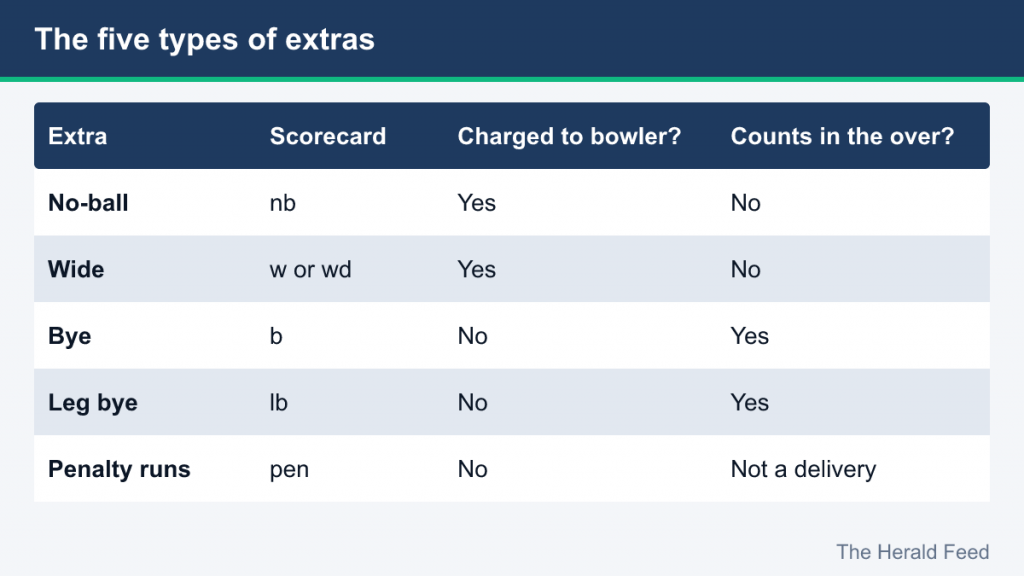
The key distinction: no-balls and wides are illegal deliveries, so they are charged against the bowler’s figures and an extra ball has to be bowled. Byes and leg byes come from legal deliveries; the bowler is not blamed, and the ball counts in the over.
No-Balls (Law 21)
A no-ball is a delivery that breaks one of the rules about how the ball must be bowled, or where fielders must stand. The umpire calls and signals “no ball,” and the batting side receives a one-run penalty, plus any runs scored from the delivery.
The front-foot no-ball
The most common no-ball is the overstep. When the bowler’s front foot lands in the delivery stride, some part of it — grounded or raised — must be behind the popping crease. If no part of the foot is behind the line, it is a no-ball. The line itself counts as “in front,” so a foot that is entirely on the line is a no-ball; a heel just behind the line is fine.
The back-foot no-ball
The bowler’s back foot must land within, and not touching, the return crease — the line at right angles to the popping crease at the side of the bowling area. This rule stops bowlers delivering from extremely wide angles.
Other causes
- Throwing: the arm must not straighten beyond the permitted tolerance during delivery.
- Mode of delivery: changing arm or side of the wicket without telling the umpire, or bowling underarm without prior agreement.
- Breaking the non-striker’s wicket during the delivery stride.
- Ball bouncing more than once, or rolling along the ground, before reaching the popping crease; or coming to rest in front of the striker’s wicket.
- Pitching off the pitch: a ball that pitches wholly or partly off the pitch before reaching the line of the striker’s wicket.
- Dangerous and unfair bowling: a full toss reaching the batter above waist height (a “beamer”), and dangerous short-pitched bowling. Professional playing conditions also limit how many bouncers may be bowled per over.
- Fielding positions: more than two fielders behind the popping crease on the leg side at the moment of delivery, or a fielder encroaching on the pitch.
- Wicketkeeper position: the keeper coming in front of the stumps before the ball has passed the striker’s wicket or touched the bat or batter.
Getting out off a no-ball
Off a no-ball, the batter cannot be out bowled, caught, LBW, stumped or hit wicket. They can still be out run out, for hitting the ball twice, or for obstructing the field. That is why a front-foot no-ball spotted after a wicket — often on replay — sends a dismissed batter back to the crease. The DRS guide explains how the third umpire checks for no-balls when a dismissal is reviewed.
How no-balls are scored
The one-run penalty is recorded as a no-ball extra. Runs that the batter scores off the bat from a no-ball are credited to the batter, and the bowler is charged with the no-ball. Some domestic one-day competitions have used a two-run penalty instead of one. If a delivery is both a wide and a no-ball, the no-ball takes priority.
The Free Hit
Free hits are not part of the Laws of Cricket — they come from playing conditions used in limited-overs cricket. After a no-ball, the next delivery is a free hit: the batter can only be out by being run out, hitting the ball twice or obstructing the field, so they can swing freely.
- Free hits were introduced for front-foot no-balls in ODIs from October 2007.
- Since July 2015, all no-balls in ODIs and T20 Internationals have led to a free hit.
- Test cricket does not use free hits.
The free hit dramatically raises the cost of a no-ball in white-ball cricket: one run for the penalty, plus whatever the batter can hit off the next ball.
Wides (Law 22)
A wide is a delivery the batter cannot reasonably hit. Under the Laws, the umpire calls a wide if the ball is not sufficiently within reach for the striker to hit it with the bat, both from where they are standing and from a normal guard position.
A delivery is not a wide if:
- the striker moves and brings the ball within reach, or moves away and takes it out of reach;
- the ball touches the bat or the striker.
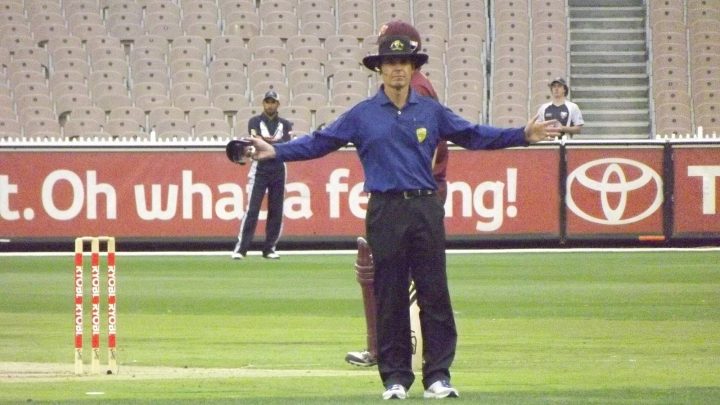
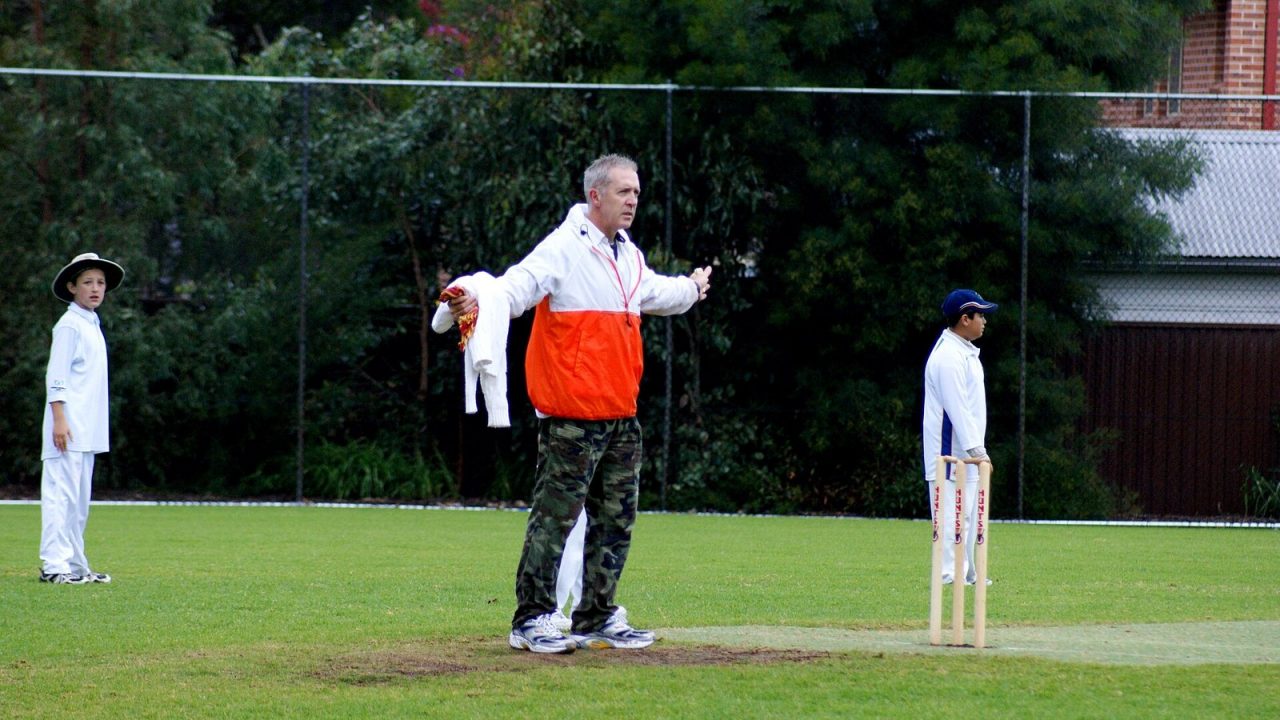
The umpire signals a wide by extending both arms horizontally.
How wides are scored
- One run is added as a penalty.
- Any runs the batters take from a wide are also recorded as wides, not byes.
- If the ball runs to the boundary, the total is five wides — the one-run penalty plus four.
- The ball does not count as one of the six in the over, so it must be re-bowled.
- Wides are charged to the bowler, a practice that has applied since the early 1980s.
A batter can still be out off a wide — stumped, run out, hit wicket, or obstructing the field.
Stricter wides in limited-overs cricket
Professional limited-overs playing conditions interpret wides much more strictly than the Laws, especially for deliveries down the leg side, to stop bowlers bowling negatively out of the batter’s reach. That is why you see far more wides called in T20 and ODI matches than in Tests.
Byes and Leg Byes (Law 23)
Byes
A bye is scored when a legal delivery passes the batter without touching the bat or the batter’s body and the batters take runs — usually because the wicketkeeper has missed it. If the ball reaches the boundary, four byes are awarded. Byes are not charged to the bowler and are generally seen as a measure of the wicketkeeper’s tidiness.
Leg byes
A leg bye is scored when the ball hits the batter’s body (not the bat or the glove holding the bat) and the batters run. But there is an important condition: leg byes may only be scored if the batter either attempted to play the ball with the bat or tried to avoid being hit. If neither applies — for instance, the batter deliberately padded the ball away without offering a shot — the umpire calls dead ball and no runs are scored.
Leg byes are not charged to the bowler.
Penalty Runs
Penalty runs are five-run awards for breaches of the Laws, usually by the fielding side but sometimes by the batting side. Examples include:
- Helmet on the ground: the ball strikes a fielder’s helmet that has been placed on the field (usually behind the wicketkeeper) — five runs to the batting side.
- Illegal fielding: a fielder stops the ball with something other than their own person, such as a cap thrown at the ball or a spare wicketkeeping glove.
- Deliberate short running or attempting to steal a run — five runs to the fielding side.
- Ball tampering, deliberate distraction or obstruction of the batter, and time-wasting or damaging the pitch after a warning.
- Serious player misconduct under the Law on players’ conduct.
Penalty runs are relatively rare, but there have been several high-profile cases in international cricket, including helmet strikes and ball-tampering awards.
Changes in the 2026 Laws
MCC published a new edition of the Laws of Cricket that comes into effect in October 2026. Two changes are relevant here:
- Wicketkeeper position: a keeper will no longer be penalised with a no-ball for having their gloves level with or in front of the stumps while the bowler is running in. The keeper must be wholly behind the stumps only once the ball is released.
- Overthrows: for the first time the Laws define an overthrow — an attempt to direct the ball towards the stumps — distinguishing it from a misfield.
The ICC decides separately which Law changes apply to international cricket, so playing conditions may differ.
Reading Extras on a Scorecard
A typical extras line looks like: Extras (b 4, lb 6, w 9, nb 3, pen 0) 22. Our guide on how to read a cricket scorecard covers the rest of the card. For a sense of scale, the record for most extras conceded in a Test innings is 76, by India against Pakistan in 2007 — a figure made up of 35 byes, 26 leg byes and 15 no-balls.