Cricket Pitches and Conditions: How Surfaces Shape the Game
Green, flat, dusty or cracked: how cricket pitches are prepared, how they change over a Test, and why weather, the toss and home advantage matter so much.
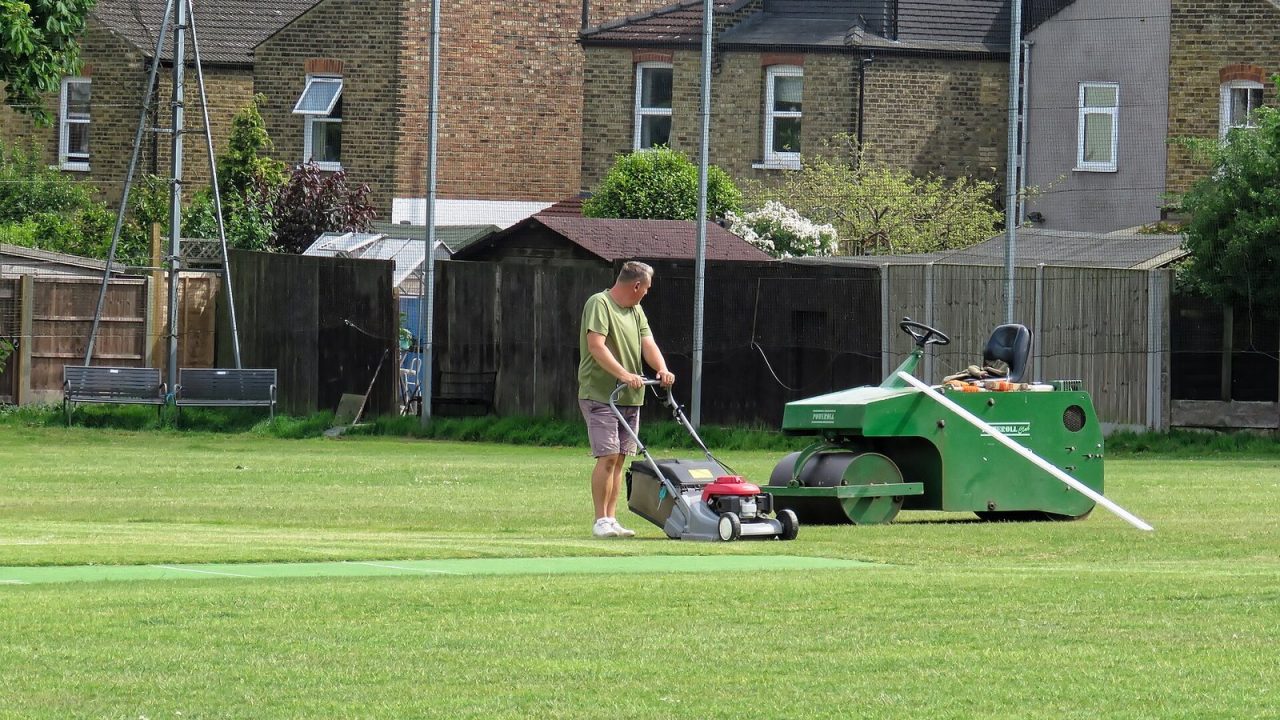
In most sports the playing surface is meant to be as consistent as possible. Cricket is different. The 22-yard strip in the middle of the ground, the pitch, varies from country to country, from ground to ground and even from one day of a match to the next. Commentators spend long minutes before the toss studying it, captains build their teams around it, and a single crack or patch of grass can decide a Test.
This guide explains what a pitch is, the main types you will hear described, how surfaces change over five days, and how weather, the toss and home advantage interact with them. It also covers the rules on preparing pitches and how the ICC rates surfaces in international cricket.
What a cricket pitch actually is
The pitch is the rectangular strip between the two sets of stumps, about 22 yards (20.12 metres) long and 10 feet (3.05 metres) wide. It sits within the “square”, the closely managed central area of the ground where several pitches are prepared side by side so that matches can be rotated across a season.
A typical pitch is covered in very short grass, rolled hard and flat. Groundstaff, often called curators in Australia, control how it plays by managing moisture, grass length and the amount of rolling. In some places, pitches can be bare and dusty, and occasionally artificial surfaces are used at lower levels of the game.
Some grounds use “drop-in” pitches, which are prepared away from the stadium and lifted into place for matches. This allows multi-purpose stadiums to host other sports in winter. The technique was first developed by John Maley of the WACA in Perth for World Series Cricket in the 1970s.
The main types of pitch
Commentators and players use a handful of shorthand labels. They are not official categories, but they capture the character of a surface.

Green pitches
A “green” or “green-top” pitch has a visible covering of grass and often some moisture underneath. Grass helps the ball grip and deviate off the seam, so these pitches favour seam bowlers. Batting can be difficult, especially early in the match, and totals tend to be lower.
Flat pitches
A flat pitch, sometimes called a “road”, is hard, dry and even, with little grass and little sideways movement. The ball comes on to the bat predictably, so batters can play their shots with confidence. Bowlers need patience, accuracy and variations, and big first-innings totals are common.
Dry and dusty pitches
When a pitch dries out and the surface begins to break up, it becomes “dusty”. Spinners can grip the ball and make it turn sharply, and the bounce becomes less predictable. Dusty surfaces are associated with many grounds in South Asia, though any pitch can deteriorate in this way late in a long match.
Cracked pitches
As a pitch bakes in the sun, cracks can appear. A ball landing on the edge of a crack can deviate or bounce unexpectedly, which is a nightmare for batters and an opportunity for bowlers of all types.
Bouncy pitches
Hard pitches with good pace and bounce reward fast bowlers who can hit the deck hard, and batters who are good at pulling and cutting. They are often associated with venues in Australia and South Africa.
The “sticky wicket”
A traditional term from the era of uncovered pitches. A wet pitch drying under the sun could make the ball behave erratically, especially for spin bowlers, and was considered almost unplayable. With modern covering, true sticky wickets are rare in professional cricket.
How a pitch changes over five days
One of the defining features of Test cricket is that the pitch evolves. A rough, general pattern is often described like this:
- Day one. Any moisture and grass is at its freshest. Seam bowlers may find movement, particularly in the first session.
- Days two and three. The surface dries and settles. This is frequently the best time to bat, with consistent pace and bounce.
- Days four and five. The pitch wears. Cracks may open, the surface can become dusty, and bowlers’ footmarks create rough patches. Spinners come into the game, and batting fourth can be the hardest task in the match.
Not every pitch follows this pattern, but it explains a lot of Test tactics. Captains who win the toss often bat first to make use of the best batting conditions and to avoid batting last on a worn surface. Teams with strong spinners may welcome a deteriorating pitch late in the game.
Footmarks and the rough
Bowlers land in roughly the same place on every delivery, and their follow-through scuffs the surface. The resulting “rough”, outside the line of the stumps, is a target for spinners. A left-arm spinner bowling to right-handers, or an off-spinner bowling to left-handers, can aim at the rough to make the ball spin and bounce unpredictably. The Laws protect the central part of the pitch: a protected area runs down the middle, and bowlers who repeatedly run on it in their follow-through receive warnings and can ultimately be removed from the attack for the innings.
Rules on preparing and maintaining the pitch
Because the pitch matters so much, the Laws of Cricket (Law 9) and the ICC’s playing conditions tightly restrict what can be done to it once a match begins. Under the ICC’s men’s Test playing conditions:
- Rolling. The pitch cannot be rolled during the match except as permitted. The captain of the batting side may ask for up to seven minutes of rolling before each innings other than the first, and before each subsequent day’s play. If more than one roller is available, the batting captain chooses which is used. A heavy roller can help flatten and bind a surface; a light roller does less.
- Mowing. The pitch and outfield are mown on each day of play if ground and weather conditions allow, under the umpires’ supervision.
- Watering. The pitch must not be watered during the match.
- Drying. If the umpires consider the pitch unfit for play, they can order it to be dried.
The choice of roller is a small but genuine tactical decision. A captain who wants the surface to stay true might choose the heavy roller; one hoping to keep cracks closed or open might think differently.
Weather, overhead conditions and the toss
The pitch is only half the story. Conditions above the ground matter too.
Cloud cover and swing
Many players and coaches believe that overcast, humid conditions help the ball swing in the air. Whatever the exact physics, captains routinely factor cloud cover into decisions, and a grey morning is often seen as a reason to bowl first. For more on how swing and seam bowlers use conditions, see our guide to types of bowling in cricket.
Rain
Rain interrupts play and can freshen a pitch. In limited-overs cricket, it also brings rain-rule calculations into play. Under modern playing conditions, covers protect the pitch from rain, which is why the old sticky wicket has largely disappeared.
Dew
In evening matches, especially in white-ball cricket in parts of South Asia, dew can settle on the outfield. A wet ball is harder for bowlers to grip, particularly spinners, so teams in these conditions often prefer to bowl first and chase.
The toss
All these factors feed into the toss. Should a captain bat first on a pitch that may deteriorate, or bowl first to exploit early moisture and cloud? The decision depends on the surface, the forecast, the format and the strengths of the two teams. A famous risk is bowling first on a pitch that looks green but turns out to be flat, handing the opposition the best batting conditions.
Home advantage
Pitches are prepared by the home ground authority, and conditions vary widely between countries. Touring teams routinely struggle to adapt.
- Subcontinental conditions. Dry, turning pitches in India, Pakistan, Sri Lanka and Bangladesh reward high-quality spin and batters who play spin well.
- English conditions. A cooler climate, cloud cover and green pitches often help seam and swing bowlers, especially in the early part of the season.
- Australia and South Africa. Hard, bouncy pitches favour fast bowlers and confident back-foot players.
- New Zealand. Often seam-friendly, with movement for bowlers in the early sessions.
These are generalisations, and individual grounds have their own character. But they explain why winning away from home is so valued in Test cricket, and why teams pick different combinations of bowlers for different tours. Batters need different techniques too; our guide to cricket batting shots explains which strokes suit which kinds of delivery.
How the ICC rates pitches
Home teams are entitled to prepare pitches that suit them, but there are limits. The ICC runs a pitch and outfield monitoring process for international matches. After each match, the match referee assesses the pitch and outfield.
Under the system described in ICC announcements from 2024:
- A pitch or outfield rated “unsatisfactory” earns the venue one demerit point.
- A pitch or outfield rated “unfit” earns three demerit points.
- Demerit points remain active for a rolling five-year period.
- A venue that reaches six demerit points is suspended from hosting international cricket for 12 months; at twelve points the suspension is 24 months.
The aim is not to make every pitch identical, but to discourage surfaces that are dangerous or so extreme that they prevent a fair contest between bat and ball. Where a pitch is genuinely dangerous during a match, the umpires and match officials can stop play.
Common misconceptions
“A green pitch always means seam-friendly”
Not always. Grass that is dry and rolled hard may offer little help. What matters is how much moisture is underneath and how the grass is cut.
“Spinners only matter on the last day”
On dry pitches spinners can be effective from the first session. Equally, spinners often play key roles on flat surfaces simply by controlling the run rate.
“Home pitches are cheating”
Preparing a pitch that suits the home side is a long-standing and accepted part of cricket, within the limits enforced by the ICC’s monitoring process.