Ruck and Maul in Rugby Union Explained
Ruck vs maul in rugby union: how each forms and ends, offside lines, "use it" calls, jackalling and the driving maul, based on World Rugby Laws 15 and 16.
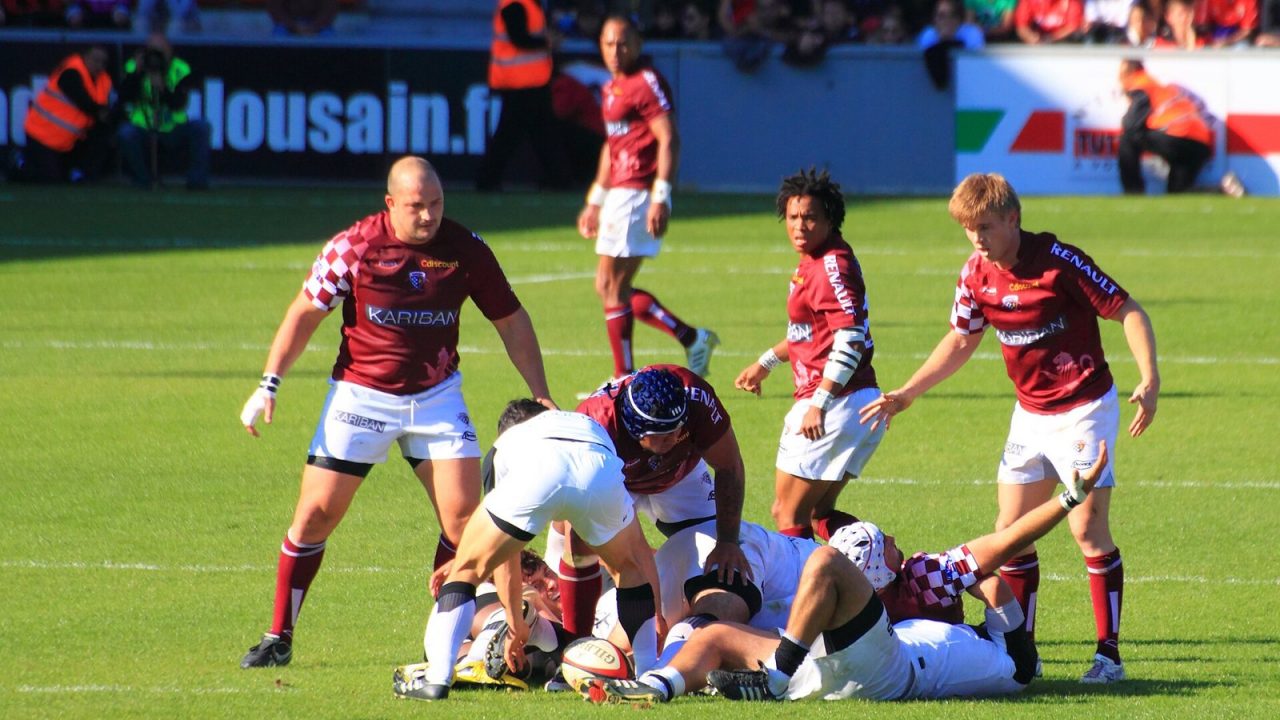
To a newcomer, rucks and mauls look like the same thing: a heap of large people pushing against each other while the ball disappears somewhere in the middle. In fact they are two distinct phases of play with different laws, different offside lines and different tactical purposes. Understanding them unlocks a large part of rugby union — many of the penalties in a typical match are awarded around the tackle and the ruck, and the driving maul is one of the most reliable try-scoring weapons in the game.
This guide is based on World Rugby’s Laws of the Game, specifically Law 14 (Tackle), Law 15 (Ruck) and Law 16 (Maul). If you are still getting to grips with the basics, our beginner’s guide to rugby union rules is a good place to start.
The One-Line Difference
The simplest way to remember it:
- Ruck: the ball is on the ground.
- Maul: the ball is held off the ground by a player who is on their feet.
World Rugby’s laws state the purpose of each in almost the same words: a ruck allows players to compete for a ball that is on the ground; a maul allows players to compete for the ball while it is held off the ground. Everything else — how they form, how players join, what counts as illegal — follows from that difference.
How a Ruck Forms
Most rucks start with a tackle. Under Law 14, once the ball-carrier is brought to ground, a sequence of obligations kicks in:
- The tackler must immediately release the ball-carrier and the ball once both are on the ground, and must get back to their feet before playing the ball.
- The tackled player must make the ball available immediately — by releasing, passing, pushing or placing it — and must not lie on or near it to stop opponents getting it.
- Arriving players must stay on their feet and come in from the direction of their own try line before playing the ball.
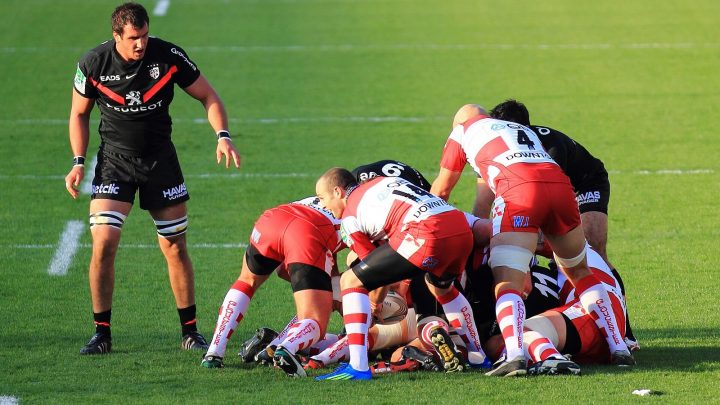
Under Law 15.2, a ruck forms when at least one player from each team is on their feet, in contact with each other, and over the ball on the ground. Players involved must keep their heads and shoulders no lower than their hips. A ruck can only happen in the field of play, not in in-goal.
Jackalling: the race before the ruck
“Jackal” is not a word in the law book, but it describes one of the most important skills in modern rugby. In the moment after a tackle and before a ruck forms, a defender who arrives on their feet, from the correct side, can try to lift the ball out of the tackle area with their hands. If they get their hands on it legally before an opponent binds onto them, they are entitled to keep competing for it. Once a ruck has formed, however, Law 15 says no player may handle the ball unless they had their hands on it before the ruck formed and stayed on their feet. That is why referees constantly shout “ruck formed — hands off” and why openside flankers and hookers who win “the race” to the ball are so valuable.
Joining and Playing in a Ruck
Once a ruck exists, the law tightens:
- Players joining must be on their feet and enter from behind their own offside line.
- They may join alongside the hindmost team-mate but not in front of them.
- They must bind onto a team-mate or an opponent, and the bind must come before or at the same time as any other contact.
- Players are allowed to ruck the ball back with their feet, provided they do so safely, or to drive opponents off the ball.
- Players on the ground must move away from the ball and must not play it in the ruck or as it emerges.
The common penalties around the ruck include: entering from the side (“not through the gate,” as commentators say), going off your feet, handling in the ruck, intentionally collapsing it, and kicking the ball out of it. A player who fakes the end of a ruck to draw opponents offside concedes a free-kick.
The ruck offside line
Each team has its own offside line at a ruck, running parallel to the try line through the hindmost point of the hindmost player of that team in the ruck. Players not in the ruck must either join it legally or get back behind that line. Defenders who stand in front of it — creeping round the side or loitering beside the ruck — are offside and can be penalised. If the hindmost point is on or behind the try line, the try line becomes the offside line.
How a Ruck Ends
A ruck ends successfully, and play continues, when the ball leaves it, when the scrum-half (or whoever plays it) lifts it off the ground, or when the ball is on or over the try line.
“Use it”
When one team has clearly won the ball at the back of a ruck and it is available to play, the referee calls “use it.” The ball must then be played within five seconds, or a scrum is awarded. This stops teams holding the ball in a ruck to waste time or reorganise at leisure.
Unsuccessful end
If the ball becomes unplayable — buried under bodies and unlikely to emerge within a reasonable time — the referee stops play and awards a scrum. Under Law 15.20, the team that was moving forward immediately before the ball became unplayable throws in. The scrum itself is covered in our scrum explainer.
How a Maul Forms
Under Law 16.2, a maul needs a ball-carrier and at least one player from each team, all bound together and on their feet. In practice, a maul forms when a ball-carrier is held up rather than taken to ground, and team-mates bind on to drive or protect the ball. Once formed, a maul must move towards a try line.
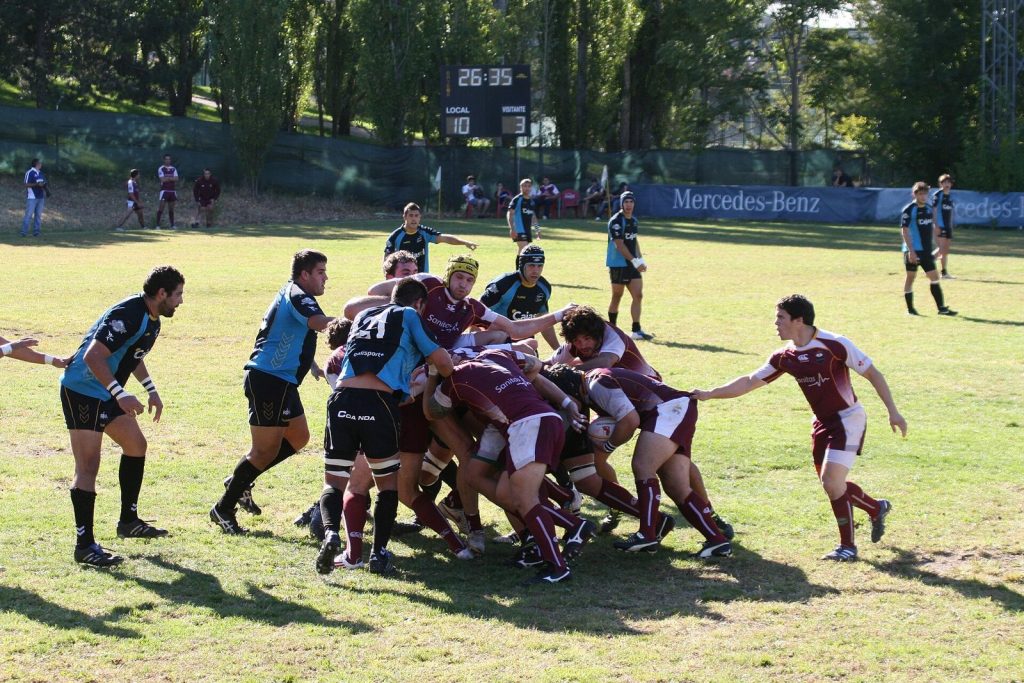
Players joining a maul must come from an onside position, bind onto the hindmost player, and keep their head and shoulders no lower than their hips. Each team’s offside line runs through the hindmost foot of its players in the maul.
What is illegal in a maul
- Intentionally collapsing a maul or jumping on top of it (penalty).
- Pulling or dragging an opponent out of a maul (penalty).
- Joining from the side or in front of the hindmost player (penalty).
- The ball-carrier sliding or moving backwards inside the maul (penalty).
- Pretending the maul has ended to draw opponents offside (free-kick).
A player trying to rip the ball from the carrier must stay in contact until the ball is transferred — long-arm transfers to another player are not allowed.
How a Maul Ends
Play continues normally when the ball or ball-carrier leaves the maul, when the ball goes to ground (at which point a ruck may form), or when the ball is on or over the try line.
A maul ends unsuccessfully, and a scrum is awarded, if:
- the ball becomes unplayable;
- the maul collapses without foul play;
- it stops moving towards a try line for more than five seconds and the ball does not emerge;
- the ball-carrier goes to ground and the ball is not immediately available;
- the referee has called “use it” and the ball is not played within five seconds.
Stopping and restarting
Law 16 allows a maul that has stopped to restart moving towards the try line, provided it does so within five seconds. If it stops a second time and the ball is visible and being moved, the referee tells the team to use it, and it must be used within a reasonable time. This is why you often hear referees shouting “maul stopped… restart… use it” in quick succession.
Defending a maul legally
Defenders are allowed to drive back against a maul, try to rip the ball, or hold the ball-carrier up. One much-discussed tactic is not engaging at all: if the defending side deliberately leaves so that none of its players remain bound in, the maul continues. If the defenders all step away and then re-engage, the first player to rejoin must bind onto the frontmost player of the attacking team — they cannot sneak in behind.
The Driving Maul From a Lineout
The most famous maul in rugby is the lineout drive. A team kicks a penalty to touch near the opposition try line, wins its own lineout throw, and the jumper is brought back to the ground with the ball held. Team-mates bind around the jumper, forming a maul with the ball passed back to a player at the rear. The pack then drives towards the line.
Why is it so effective?
- Eight forwards organised in advance can generate more momentum than defenders who must react.
- Defenders cannot legally collapse the maul, so they must stop it by pushing or holding it up.
- Because the ball is protected at the back, defenders cannot easily get to it.
Teams also use the threat of the maul to create space elsewhere: if defenders commit to stopping the drive, the scrum-half or a back can attack the short side. The roles of the forwards in this set-up — hooker throwing, locks jumping, props lifting — are described in our guide to rugby union positions.
Common Mistakes Viewers Make
“A ruck is just a pile-up”
Every player in a legal ruck should be on their feet and bound. Bodies lying on the ground near the ball are usually committing an offence, which is exactly why “sealing off” and “not rolling away” penalties are so common.
“The defending team can’t do anything against a maul”
They can drive, rip, hold up the ball-carrier, or choose not to engage. What they cannot do is collapse it or join from the side.
“If the maul goes down, it’s always a penalty”
Not necessarily. A maul that collapses without foul play simply ends in a scrum. A penalty is only awarded if the referee judges that a player collapsed it deliberately or illegally.
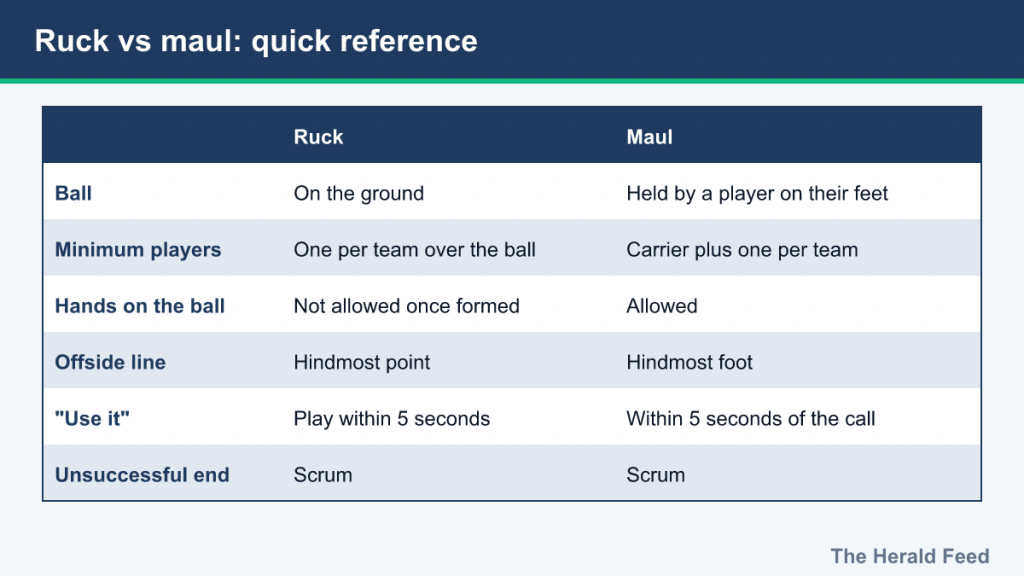
Quick Reference
| Ruck | Maul | |
|---|---|---|
| Ball | On the ground | Held by a player on their feet |
| Minimum players | One from each team, on their feet, over the ball | Ball-carrier plus one from each team, bound |
| Hands on the ball | Not allowed once formed (unless hands were on it before) | Allowed — players compete to rip it |
| Offside line | Hindmost point of team’s hindmost player | Hindmost foot of team’s hindmost player |
| “Use it” | Play within five seconds | Play within five seconds of the call |
| Unsuccessful end | Scrum | Scrum |