Rugby Union Rules: A Beginner’s Guide to How the Game Works
New to rugby union? Learn how the game works: 15 players, 80 minutes, how points are scored, forward passes, tackles, rucks, scrums, lineouts and cards.
Rugby union can look chaotic the first time you watch it. Thirty players collide, the ball disappears under a pile of bodies, the referee blows the whistle and nobody around you seems surprised. Underneath the noise, though, the game runs on a small number of clear principles. Once you understand them, almost every whistle starts to make sense.
This guide covers the essentials, using World Rugby’s Laws of the Game: scoring, the ban on forward passes, and the phases you will see again and again — tackle, ruck, maul, scrum and lineout.
The Object of the Game
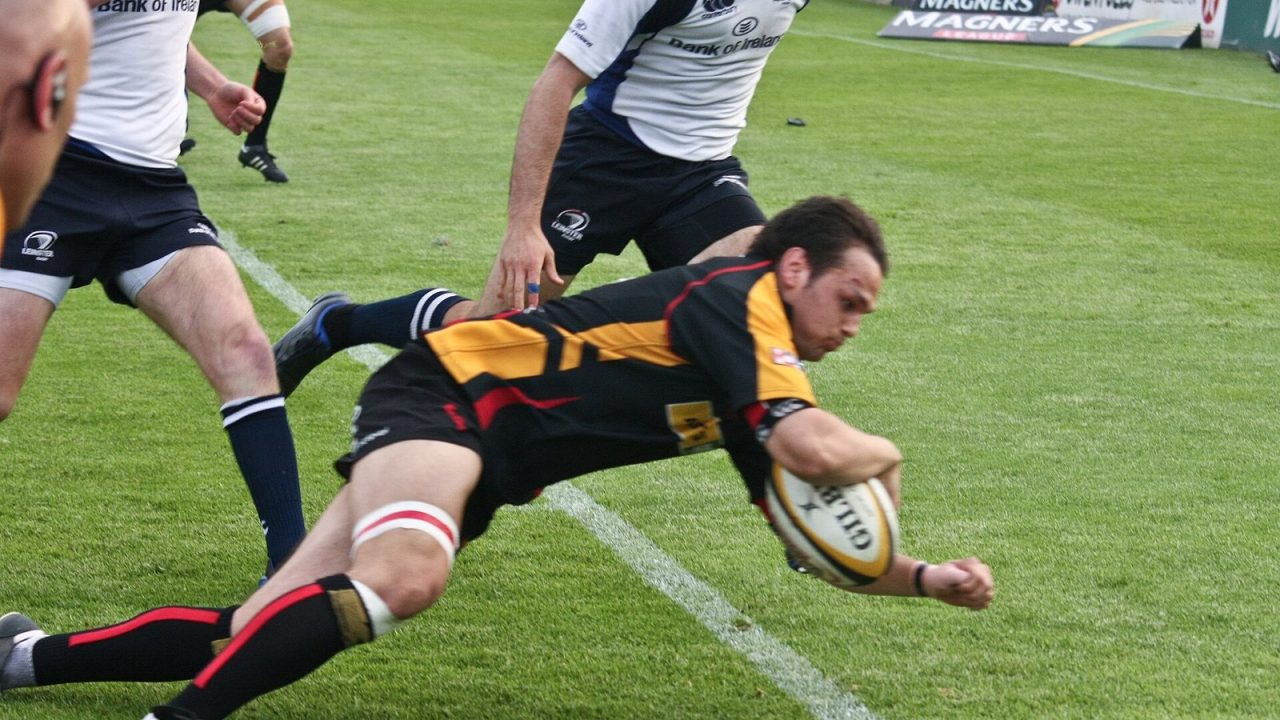
Each team tries to carry, pass or kick an oval ball forward and ground it in the opposition’s in-goal area — the zone between the try line and the dead-ball line at each end of the pitch. Grounding the ball there scores a try, the most valuable score in the game. Teams can also score by kicking the ball between the H-shaped posts and over the crossbar.
The contest is about territory and possession. Because you cannot throw the ball forward, every metre has to be earned by running, kicking, or driving forward in a group.
Teams and match length
Under Law 3, each team has no more than 15 players on the field during play. In international matches a union may nominate up to eight replacements, so a full matchday squad is 23 players. Replacements can only come on when the ball is dead and with the referee’s permission, and teams must have enough trained front-row forwards (props and hookers) to keep scrums safe.
Law 5 sets the match length: a game lasts no longer than 80 minutes, split into two halves of not more than 40 minutes plus time lost. The half-time interval is decided by the match organiser and cannot exceed 15 minutes. Extra time is only played if the organiser allows it in a drawn knock-out match.
One detail surprises new viewers: the clock reaching 40 or 80 minutes does not immediately end the half. A half ends when the ball next becomes dead after time has expired, so a team in possession can keep attacking after the hooter.
How Scoring Works
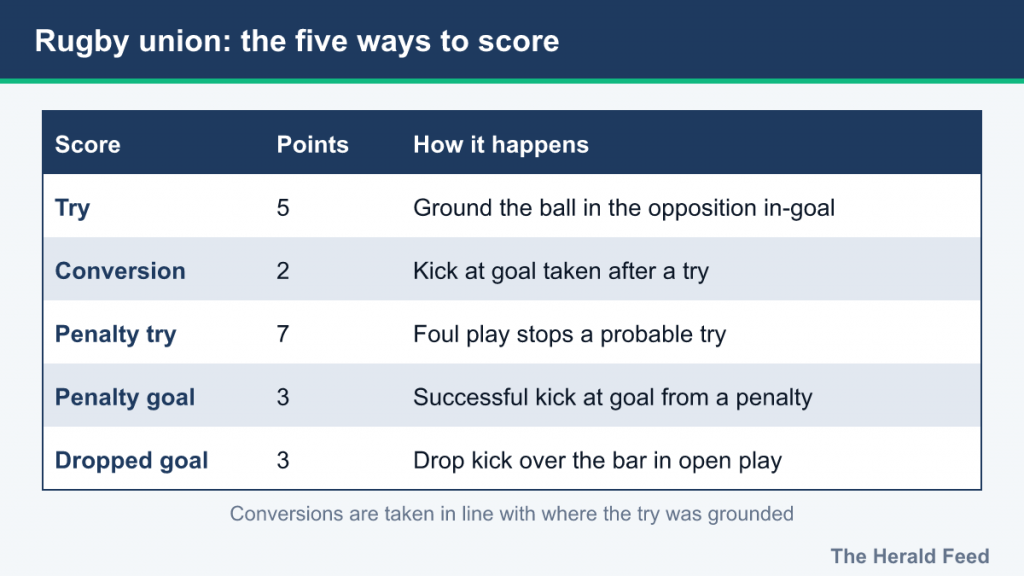
Law 8 lists five ways to score. These values apply across the sport under World Rugby’s laws:
| Score | Points | How it happens |
|---|---|---|
| Try | 5 | Grounding the ball in the opposition in-goal area |
| Conversion | 2 | A kick at goal taken after a try |
| Penalty try | 7 | Awarded when foul play prevents a probable try; no conversion is taken |
| Penalty goal | 3 | A successful kick at goal from a penalty |
| Dropped goal | 3 | The ball is dropped and kicked on the half-volley over the bar in open play |
After a try, the scoring team attempts a conversion. The kicker must take it from anywhere on a line through the point where the try was grounded, parallel to the touchlines. That is why attackers try to touch down close to the posts: a try in the corner leaves a much harder angle. The kick must be taken within 60 seconds of the try being awarded, and it can be a place kick (off the ground or a kicking tee) or a drop kick.
A penalty try is worth seven points because the conversion is assumed. It is awarded between the posts when foul play by the defending team stops a try that would probably have been scored, and the offending player is shown a yellow or red card.
When a team is awarded a penalty, the captain can kick at goal for three points, kick to touch for a lineout, take a scrum, or tap and run — one of the captain’s key decisions.
The Forward Pass and the Knock-On
The single rule that defines rugby is that the ball cannot be thrown or passed forward — towards the opposition’s dead-ball line. Players may run forward with it and kick it forward, but every pass must travel sideways or backwards relative to the passer. This is why rugby attacks form diagonal lines, with supporting runners slightly behind the ball carrier.
Law 11 also covers the knock-on, where a player loses control of the ball and it goes forward off the hand or arm. A forward pass or an accidental knock-on is not a penalty offence: play stops and the opposition gets a scrum. A deliberate knock-on, such as slapping a pass forward to stop an attack, is penalised, and can lead to a card if it prevents a probable try.
There are sensible exceptions. If a player charges down an opponent’s kick and the ball goes forward, play continues. And if a defender rips or knocks the ball out of a carrier’s hands and it goes forward from the carrier, that is not a knock-on by the defender either.
The Tackle, the Ruck and the Maul
These three phases look similar on television but follow different laws.
The tackle
Under Law 14, a tackle happens when the ball carrier is held and brought to ground by one or more opponents. Once both players are down, the obligations are clear:
- The tackler must immediately release the ball carrier, move away or get up, and be back on their feet before playing the ball.
- The tackled player must make the ball available straight away — by releasing it, passing it, or placing it in any direction except forward — and must not lie on it.
- Arriving players must stay on their feet, come in from their own side (from the direction of their own try line), and not go off their feet to seal the ball.
A defender who stays on their feet over the ball and gets their hands on it immediately can legally win it back. Commentators call this “jackalling”, and it is one of the most valuable skills in the modern game.
Tackles must also be safe. The laws set a sanction line for high tackles: the shoulder in elite rugby, and lower — the waist or base of the sternum — in community rugby where unions adopt it.
The ruck
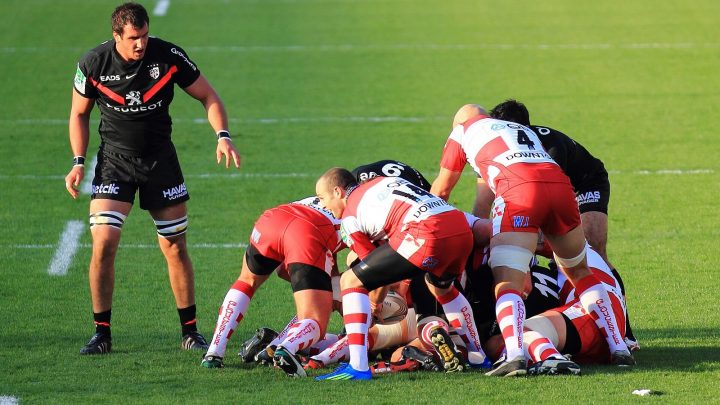
A ruck forms when the ball is on the ground and at least one player from each team, on their feet, is in contact over it. From that moment, players cannot use their hands to pick the ball up; they must use their feet to drive over it or wait for the scrum-half to pass it away. Each team gets an offside line running through the hindmost point of its players in the ruck, and anyone in front of that line who is not part of the ruck is offside. Once the ball is clearly won, the referee calls “use it”, and the team has five seconds to play it away or a scrum is awarded.
The maul
A maul is the upright version: the ball carrier is held by at least one opponent, and at least one team-mate binds on, with everyone on their feet. The attacking team can then drive forward as a unit. Mauls are especially common straight after a lineout close to the try line, where a well-organised pack can push several metres and score. A maul must keep moving; if it stalls, the referee will tell the team to use the ball.
Set Pieces: Scrums and Lineouts
The scrum
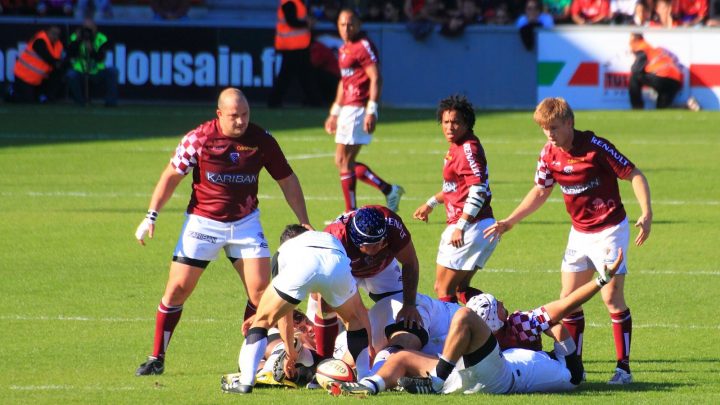
A scrum is awarded for minor infringements such as a knock-on or forward pass. Eight forwards from each side bind together and push against each other, the scrum-half feeds the ball into the tunnel between the front rows, and the hookers try to strike it back with their feet. The referee manages the engagement with the calls “crouch, bind, set”. Scrums are a test of strength and technique, and a dominant scrum often wins penalties.
The lineout
When the ball goes into touch (over the sideline), play usually restarts with a lineout. Players from both teams form two parallel lines at right angles to the touchline, and the hooker of the throwing team throws the ball straight down the middle. Team-mates can lift a jumper to catch it. The throw must be straight; if it is not, the opposition can choose a lineout or a scrum.
Kicking out of play has consequences for where the lineout happens. If a defending player catches the ball inside their own 22-metre area and kicks it directly into touch, the lineout is taken where the ball crossed the touchline — they gain ground. Kick it out on the full from outside the 22 (or after carrying it back into the 22 yourself), and the lineout goes back level with where the kick was taken. In both cases the opposition throws in. This is why full-backs try to field the ball inside their 22 before clearing.
Offside in Brief
Rugby has several offside lines, and they move with the play. In open play, a player in front of a team-mate who is carrying or last played the ball is offside and cannot take part until put back onside. At rucks and mauls, the line runs through the hindmost point of your own team’s players in that breakdown, and scrums and lineouts have their own lines for players not involved.
The rule of thumb: defenders stay behind the relevant line until the ball is out, and players in front of a kicker get back or stay out of play. Offside, going off your feet at the breakdown and not releasing are among the most common penalties.
Penalties, Free Kicks and Cards
Serious offences — offside, illegal play at the breakdown, foul play — earn a penalty. Lesser technical offences, such as a crooked scrum feed, earn a free kick instead. The referee often plays advantage first: play continues, and if the non-offending team gains nothing, the referee brings it back.
Law 9 governs foul play: obstruction, unfair play, repeated infringements, dangerous play and misconduct. The sanctions are:
- Yellow card — the player is suspended for 10 minutes, leaving the team a player short. A second yellow card for the same player becomes a red.
- Red card — the player is sent off for the rest of the match. Under the standard law, a sent-off player cannot be replaced.
The current Laws also include a note for elite rugby: for intentional or highly dangerous acts the player still cannot be replaced, but for other red-card offences a replacement can come on after 20 minutes of playing time. This “20-minute red card” applies to elite competitions; community games usually follow the standard sanction, so check with your local union.
Common Beginner Questions
Why do teams kick so much?
Kicking gains territory without the risk of being tackled and forces the opposition to play from deep in their own half.
What happens when nobody knows who infringed?
If the ball becomes trapped in a tackle, ruck or maul and the referee cannot see a clear offence, play restarts with a scrum rather than a penalty. A maul that stops moving for more than five seconds, or a ruck where the ball will not come out, ends the same way. It keeps the game flowing without punishing a team for something it did not clearly do.
If you remember only a few things, make them these: no forward passes, stay on your feet, stay onside, and release the ball when tackled. That covers most of what happens on a rugby pitch.