State of Origin Explained: Queensland vs New South Wales
How rugby league's State of Origin works: eligibility rules, the 1980 start, the three-game series, Queensland's eight in a row and women's Origin.
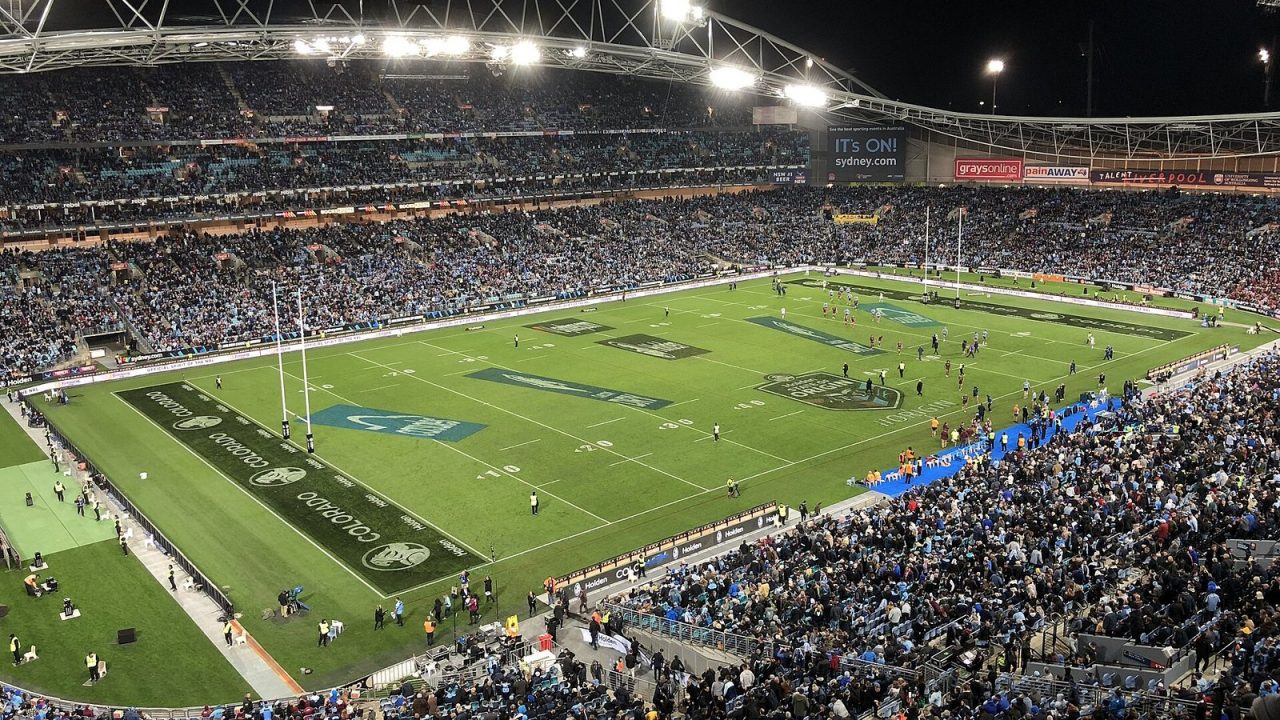
Every winter, Australian rugby league stops to watch three matches between Queensland and New South Wales. State of Origin pits the Maroons against the Blues in one of the most intense rivalries in the sport — fast, physical, fiercely tribal, and followed by huge television audiences. This guide explains how Origin works, why it began, how players qualify, the great eras, and the women’s series.
If you are new to rugby league itself, start with our beginner’s guide to rugby league rules.
Before Origin: Why It Was Needed
Queensland and New South Wales had played interstate rugby league since 1908. The problem was selection. Until the early 1980s, players were picked for the state where their club was based, and the richest, strongest competition was in Sydney. Queensland’s smaller economy meant many of its best players moved south to Sydney clubs — and then lined up for New South Wales against their home state. Under those rules Queensland’s overall interstate record was 54 wins, 8 draws and 159 losses.
The idea of picking players by their “origin” came from Jack Reardon, a former Queensland captain turned journalist, who argued that Sydney-based Queenslanders should be available to represent their state. Hugh Lunn, Barry Maranta and Wayne Reid helped persuade Queensland Rugby League chairman Ron McAuliffe, and Reid took the idea to New South Wales Rugby Football League president Kevin Humphreys. Humphreys suggested a one-off match that would double as a Test selection trial. Some Sydney clubs objected to releasing their players, but backed down when Humphreys threatened to make the game an official trial.
The First Origin Matches, 1980 and 1981
The first State of Origin match was played on 8 July 1980 at Lang Park in Brisbane, and Queensland won 20–10. A second experimental match followed in 1981, which Queensland also won, 22–15, after trailing early. From 1982 the concept became a best-of-three series, played around the middle of the club season, and that format has been used ever since.
The early series were competitive. New South Wales won its first series in 1985 and completed a 3–0 whitewash in 1986. In 1987 an additional match was played in Long Beach, California, as an exhibition; it was later reclassified as an official Origin match in 2003. Along with the 1980 and 1981 games, it is one of three one-off matches included in the all-time match count.
Who Can Play: Selection and Eligibility
The core rule is that a player represents the state where they first played senior (registered) rugby league, rather than the state of their current club. That is why a Queensland-born player at a Sydney club still plays for the Maroons.
Eligibility has been refined over time:
- In 2012, additional criteria — including place of birth and other residence-based factors — were written into the eligibility rules.
- Restrictions concerning players who had represented certain other nations at Test level were repealed in 2026.
Eligibility debates flare up regularly, especially when a high-profile player could theoretically qualify for either state. The governing body publishes the detailed criteria, which can change between seasons.
How a Series Works
- Three matches, usually spread across several weeks in the middle of the club season.
- The main venues are Lang Park (Suncorp Stadium) in Brisbane for Queensland and Stadium Australia in Sydney for New South Wales, with a third venue rotating each year. Games have been taken to the Melbourne Cricket Ground, Docklands Stadium, Perth Stadium and Adelaide Oval, as well as Townsville and the Gold Coast.
- The team that wins two matches wins the series.
- If the series is drawn — possible when a match is drawn — the holder retains the shield.
The trophy is the State of Origin Shield. The original shield depicted Queensland’s Wally Lewis and New South Wales’s Brett Kenny, two of the great players of the early Origin years.
The Wally Lewis Medal
The player of the series receives the Wally Lewis Medal. It was originally a Queensland award, presented by the Queensland Rugby League to the Maroons’ best player from 1992 to 2003; since 2004 it has gone to the player of the series from either state. Recent winners include Queensland’s Tom Dearden (2025) and New South Wales’s Nathan Cleary (2026).
The Record Through 2026
| Queensland | New South Wales | |
|---|---|---|
| Series won (1982–2026) | 25 | 18 |
| Drawn series | 2 (1999 and 2002, both retained by Queensland) | |
| Matches won (including the one-off games) | 71 | 62 |
| Drawn matches | 2 | |
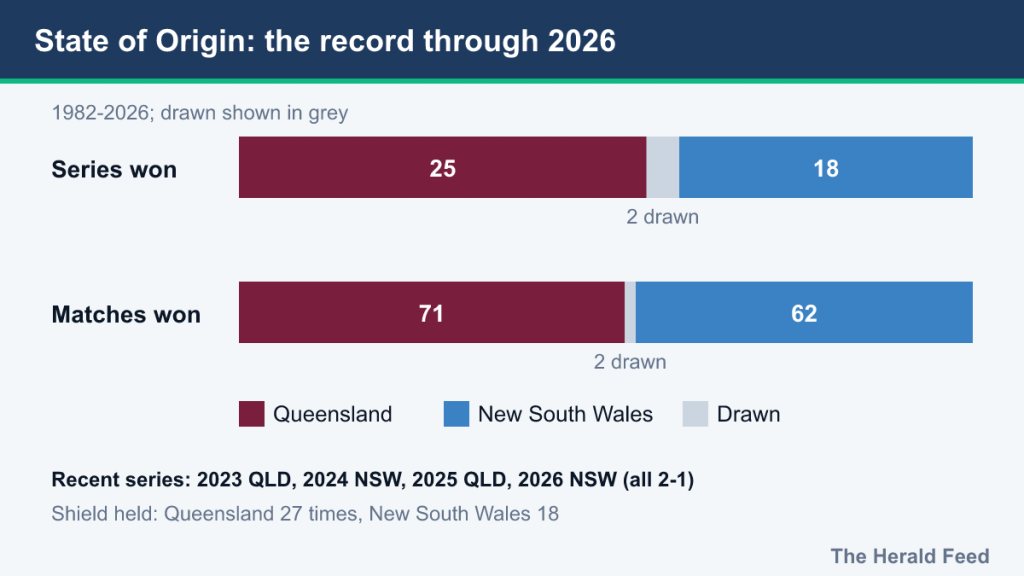
Counting the two drawn series in which Queensland kept the shield, Queensland has held the title 27 times to New South Wales’s 18.
Recent series
| Year | Winner | Series score |
|---|---|---|
| 2023 | Queensland | 2–1 |
| 2024 | New South Wales | 2–1 |
| 2025 | Queensland | 2–1 |
| 2026 | New South Wales | 2–1 |
The 2026 series opened with New South Wales recovering from 20 points down to win Game 1 22–20, a reminder of how quickly Origin matches can turn.
The Great Eras
The early years
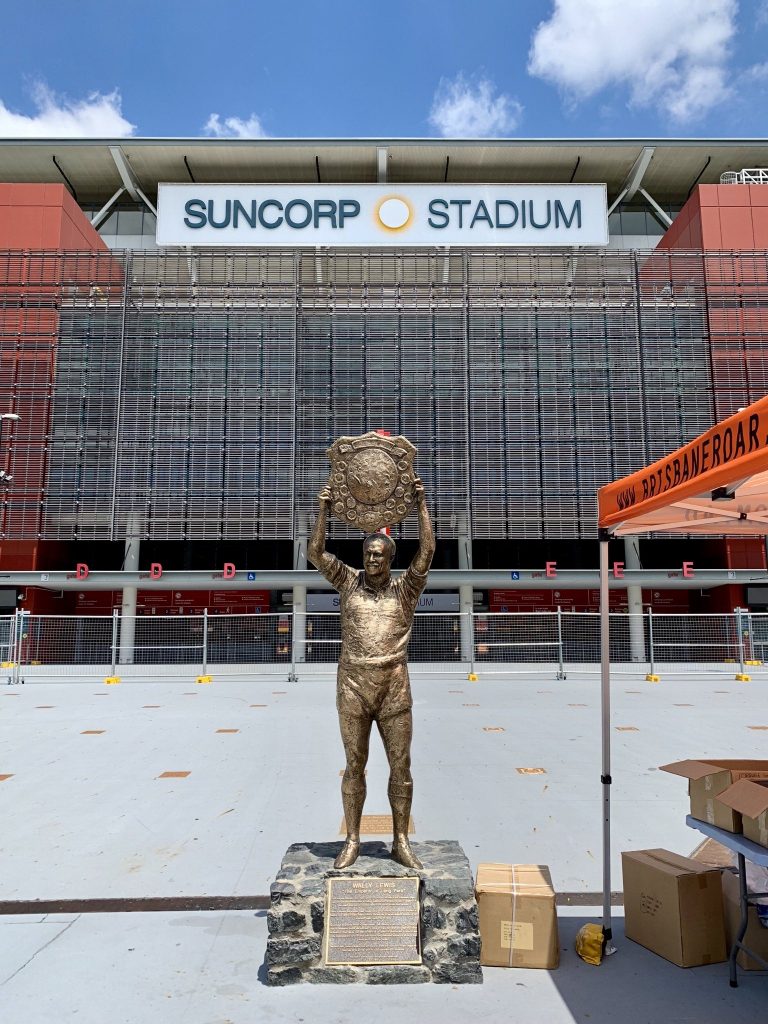
Origin’s first decade established its reputation. Queensland, so often beaten in the old interstate format, could now pick its best players, and the early matches made stars and legends on both sides. Wally Lewis became the face of the Maroons in that period.
Queensland’s eight in a row (2006–2013)
The defining era of modern Origin belongs to Queensland. From 2006 to 2013 the Maroons won eight consecutive series, a record. Their dominance continued beyond that streak: Queensland won 11 of the 12 series from 2006 to 2017. That team, built around a group of champion players who stayed together for years, set a standard that New South Wales spent a decade trying to match.
The modern contest
Since the end of that run, the series has been much more evenly shared, with titles swinging between the states — as the recent results above show. New South Wales has had periods of control, and Queensland has repeatedly won series in which it was not the favourite.
Women’s State of Origin
Women’s interstate rugby league between Queensland and New South Wales goes back to 1999, when Queensland won the first match 16–6 in Brisbane. The fixture was branded as Women’s State of Origin from 2018, when New South Wales won the first match under that name 16–10.
For several years the women’s Origin was a single match (with occasional two-game contests), until the first three-game women’s series was played in 2024.
| Year | Winner | Result |
|---|---|---|
| 2018 | New South Wales | 1–0 |
| 2019 | New South Wales | 1–0 |
| 2020 | Queensland | 1–0 |
| 2021 | Queensland | 1–0 |
| 2022 | New South Wales | 1–0 |
| 2023 | Queensland | 1–1 (on points aggregate) |
| 2024 | Queensland | 2–1 |
| 2025 | New South Wales | 2–1 |
| 2026 | New South Wales | 3–0 |
Across the Origin-branded era (2018–2026), New South Wales has won five series and Queensland four. Queensland dominated the earlier interstate years before the Origin branding.
Why Origin Matters So Much
- State identity: Queensland and New South Wales have a long-running rivalry well beyond sport, and Origin channels it.
- The highest standard: with only the best players from the two strongest rugby league states, the pace and physicality are exceptional.
- Huge audiences: in 2013, each Origin game drew a larger Australian television audience than any other sporting event that year, and the 2026 games drew roughly four million viewers or more on the national “Total TV” measure. The series is broadcast in Australia by the Nine Network and televised in dozens of other countries.
- Club vs state: Origin takes place during the NRL season, so club team-mates become opponents for a night, then return to their clubs days later.
- Selection drama: debates over who should be picked dominate the weeks before each series.
FAQ
When did State of Origin start?
The first match was on 8 July 1980 at Lang Park, Brisbane, and the three-game series format began in 1982.
Which state has won more series?
Queensland, with 25 series wins to New South Wales’s 18 through 2026, plus two drawn series.
Has Origin ever been moved out of mid-season?
Yes. In 2020 the series was moved to November because of the COVID-19 pandemic, after the club season had finished — a rare break from its usual place in the middle of the year.
How does Origin affect the club season?
Because Origin is played during the NRL season, clubs with several representative players can be weakened around Origin matches, and the fixture list has to be planned around the three games. Players also have to manage the physical toll of moving from club football to Origin intensity and back within days. Many fans see coping with Origin absences as part of what separates a good club season from a great one.
What is the best way to follow a series for the first time?
Watch Game 1 with an eye on the forwards’ battle in the first twenty minutes, follow the selection debate before Game 2, and pay attention to the halves — the playmakers who control kicking and the final tackle of each set. Origin series are often decided by who wins the territory battle and who handles the pressure of the closing minutes.
Is State of Origin played under different rules?
It uses rugby league laws, so a team has a set of six tackles and play restarts with a play-the-ball; see our guide to the differences between union and league for how that compares with rugby union.