Cricket Fielding Positions Explained: Slip, Gully, Point and More
A map of cricket's fielding positions: off side and leg side, slips and gully, point, cover, mid-on, square leg, fine leg, third man, and how fields change.
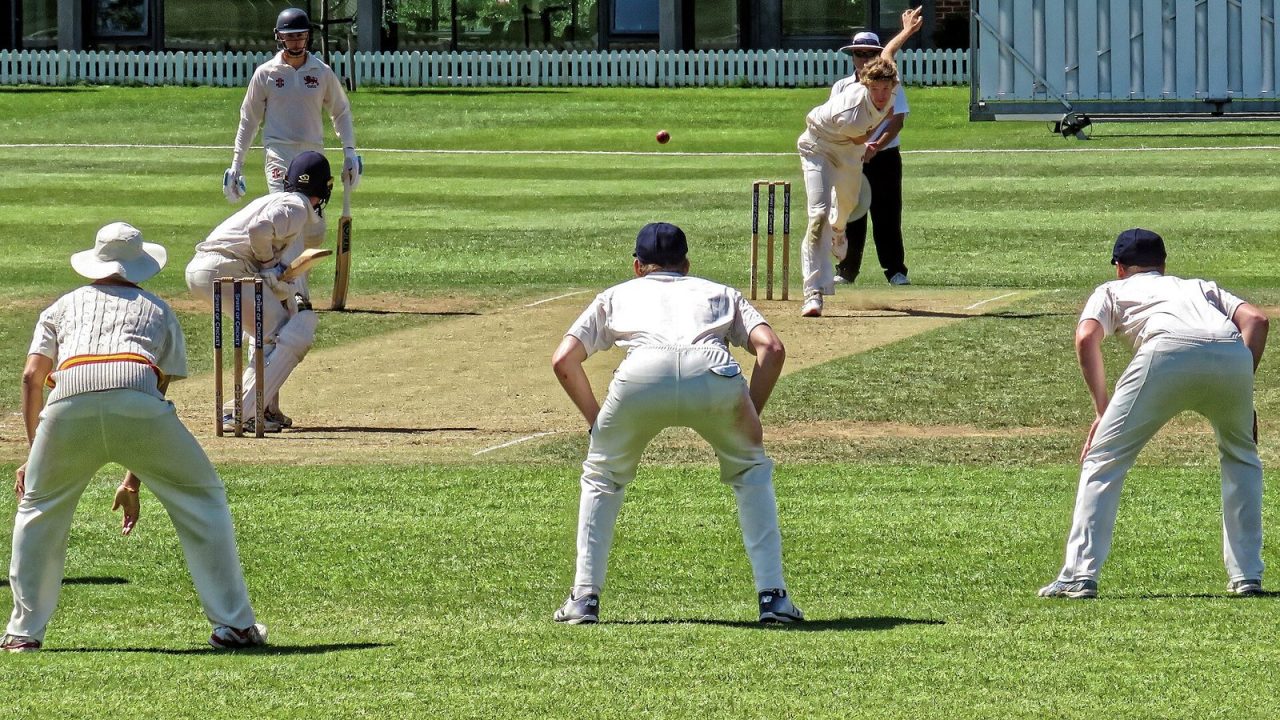
Commentators throw around fielding positions as if everyone knows where they are: “caught at gully”, “pushed into the covers”, “top-edged to fine leg”. For new fans, the names can sound like a private language. But they follow a logic, and once you understand it, you can read a captain’s plans just by looking at where the fielders stand.
This guide maps the field, explains the words used to describe positions, and shows how captains set attacking and defensive fields. If you are still getting to grips with the basics, our beginner’s guide to cricket rules is a good place to start.
Off Side and Leg Side
Every fielding position is described relative to the batter on strike. Draw an imaginary line down the middle of the pitch and out to the boundary at each end. That line divides the field into two halves:
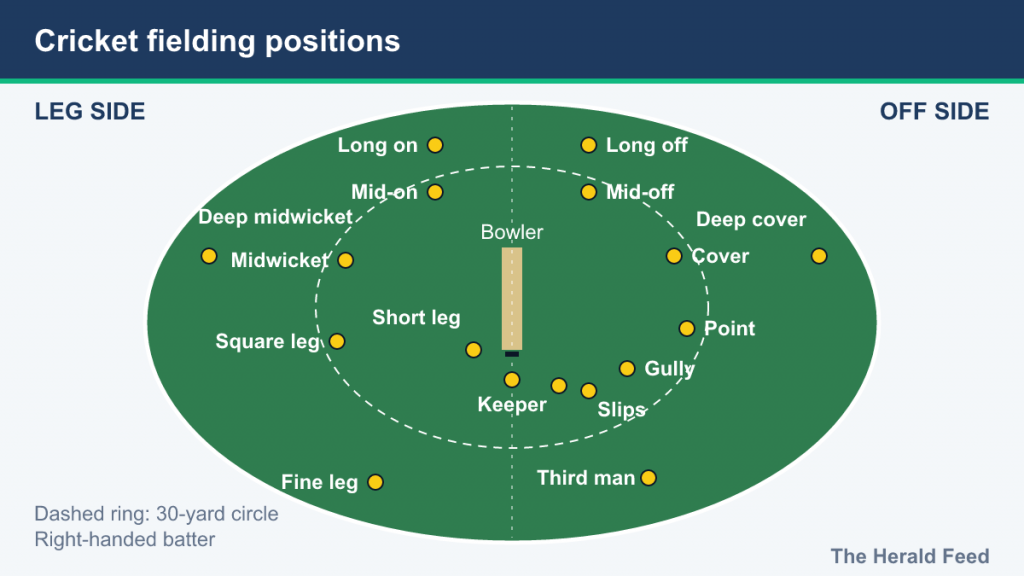
- The off side is the side the batter’s bat faces when they take their stance. For a right-handed batter, that is the right-hand side of the field as they look down the pitch towards the bowler.
- The leg side, also called the on side, is the other half — behind the batter’s legs. For a right-hander, that is to their left.
For a left-handed batter, everything is reversed. The positions become mirror images, which is why fielders shuffle across the field whenever a left-hander and a right-hander swap strike.
A second imaginary line runs square to the pitch through the batter, roughly along the popping crease. Positions in front of that line are “in front of square”; positions behind it are “behind square”.
The Vocabulary of Fielding
Most position names are built from a base name plus modifiers. Learn the modifiers and you can place almost any fielder:
| Modifier | Meaning |
|---|---|
| Silly | Very close to the batter, usually for catches (silly point, silly mid-on) |
| Short | Closer to the batter than normal (short leg, short cover) |
| Deep / long | Further away, often near the boundary (deep cover, long on) |
| Square | Roughly in line with the popping crease (square leg) |
| Fine | Behind square, close to the line of the stumps (fine leg) |
| Backward | Moved towards the batter’s end, behind square (backward point) |
| Forward / straight | Moved towards the bowler’s end, or nearer the line of the stumps |
| Saving one | Close enough to stop a quick single |
The Close Catchers
Close catchers stand near the bat to take edges and mistimed shots. They are the clearest sign of an attacking captain.
Wicketkeeper
The keeper stands behind the striker’s stumps — further back for fast bowlers, right up at the stumps for spinners. They take catches from edges and are the only fielder who can make a stumping.
Slips
The slips stand in an arc beside the keeper on the off side, numbered outwards: first slip, second slip, third slip and so on. Together they form the “slip cordon”. They are there to catch outside edges from balls angled across the batter or moving away off the seam. A Test captain with a new ball and a bowler finding swing might set three or four slips.
Gully
Gully stands a little wider and squarer than the slips, catching thicker edges and cuts that fly upwards. Gully is often used together with the slips against fast bowling.
Short leg and silly point
Against spin, close catchers move in front of the bat. Short leg (also called bat-pad) crouches a metre or two from the batter on the leg side, waiting for balls that pop up off bat and pad. Silly point mirrors that position on the off side. Both wear protective helmets and shin guards, and the “silly” prefix tells you how dangerous the job can be.
Leg slip and leg gully
These are the leg-side equivalents of slip and gully. They are used for specific plans: a leg-spinner hoping for a glove down the leg side, or a fast bowler targeting the body.
The Ring Fielders
Ring fielders stand roughly 15–30 metres from the bat, close enough to stop singles and far enough to cut off drives. In limited-overs cricket the 30-yard circle marks this area for the fielding restrictions.
On the off side
- Point — square of the batter on the off side, where cuts and square drives go. Backward point is slightly behind square.
- Cover — in front of square, between point and mid-off. Extra cover is a little straighter. The “covers” field the cover drive, one of the classic shots in the game.
- Mid-off — on the off side, fairly straight, near the bowler’s end. It is often occupied by the captain or the bowler’s partner between overs.
On the leg side
- Mid-on — the leg-side mirror of mid-off.
- Midwicket — between mid-on and square leg, where flicks and pulls through the leg side are aimed.
- Square leg — square of the batter on the leg side. The striker’s-end umpire usually stands nearby.
The Deep Fielders
Deep fielders patrol the boundary to stop fours and take catches from big hits.
- Third man — behind square on the off side, fine and deep, collecting edges and late cuts that go past the slips.
- Fine leg — behind square on the leg side, near the boundary, catching glances and top-edged hooks. Fast bowlers often field at fine leg or third man between overs.
- Deep point, deep cover and deep extra cover — the boundary versions of the ring positions. A fielder sweeping along the off-side boundary is often called a sweeper.
- Long off and long on — straight boundary positions either side of the bowler, waiting for lofted drives.
- Deep midwicket and deep square leg — leg-side boundary positions for pulls, sweeps and slogs. The area between deep midwicket and long on is jokingly known as cow corner, a target for agricultural heaves.
Long stop, a position directly behind the keeper on the boundary, was common in early cricket but is almost never seen in the professional game today.
Rules That Limit Where Fielders Stand
Captains have a lot of freedom, but not total freedom. The MCC Laws of Cricket set some limits:
- Law 28.4: at the moment of delivery, no more than two fielders, other than the wicketkeeper, may be behind the popping crease on the on (leg) side. Breaking this rule is a no-ball. The restriction is usually linked to the Bodyline controversy of 1932–33, when packed leg-side fields were combined with short, fast bowling at the body.
- Law 28.3: spare helmets for close fielders may only be left on the ground behind the wicketkeeper, in line with the stumps. If the ball hits one while in play, it becomes dead and the batting side is awarded five penalty runs.
- Law 28.5: fielders may not stand on or reach over the pitch until the ball has touched the bat or batter or passed the bat.
- Law 24.2.1, added in the 2026 edition: fielders must be inside the field of play when the ball is released, closing a loophole about players positioned outside the boundary.
Limited-overs internationals add fielding restrictions on how many players may be outside the 30-yard circle in each phase of an innings. Our guide to Test, ODI and T20 formats explains the powerplays in each.
Attacking vs Defensive Fields
The attacking field
An attacking field puts fielders close to the bat to take catches, accepting that runs will leak through gaps. Against pace with a new ball, that means slips, gully and perhaps a short leg. Against spin on a turning pitch, it might mean a slip, short leg and silly point. Captains attack when the bowler is on top, when a new batter has just come in, or when the conditions offer swing, seam or turn.
The defensive field
A defensive field spreads fielders out to stop runs. Fielders move to the ring to cut off singles and to the boundary to cut off fours. Captains defend late in limited-overs innings, when a batter is well set, or when they are protecting a total.
Reading the field
Field settings are often described by how many fielders are on each side: a “7–2 field” means seven on the off side and two on the leg side. That tells you the bowler plans to bowl outside off stump, inviting drives into a packed off side. A heavy leg-side field with men out on the hook suggests a bouncer plan. Sometimes the field is a bluff: a fine leg moved squarer just before a delivery can tempt a batter into a shot.
How Fields Change for Left-Handers
When a left-hander faces, every position flips to the other side of the pitch. First slip moves to the other side of the keeper, point becomes the left-hander’s point (on what was the leg side for the right-hander), and so on. A partnership between a left- and right-hander forces the fielding side to reset after every single, costing time and sometimes breaking a bowler’s rhythm. That is one reason many teams value left-right combinations at the crease.
Bowlers also change their line. A right-arm seamer bowling over the wicket to a right-hander angles the ball across the batter towards the slips. To a left-hander, the same delivery angles into the batter, so captains may move a slip to the leg side or bring in an extra fielder on the off side to match the new angle.