The Ashes: History of Cricket’s Oldest Rivalry
The Ashes explained: the 1882 mock obituary, the tiny urn, how a series is won or retained, famous series, and England and Australia's record through 2025–26.
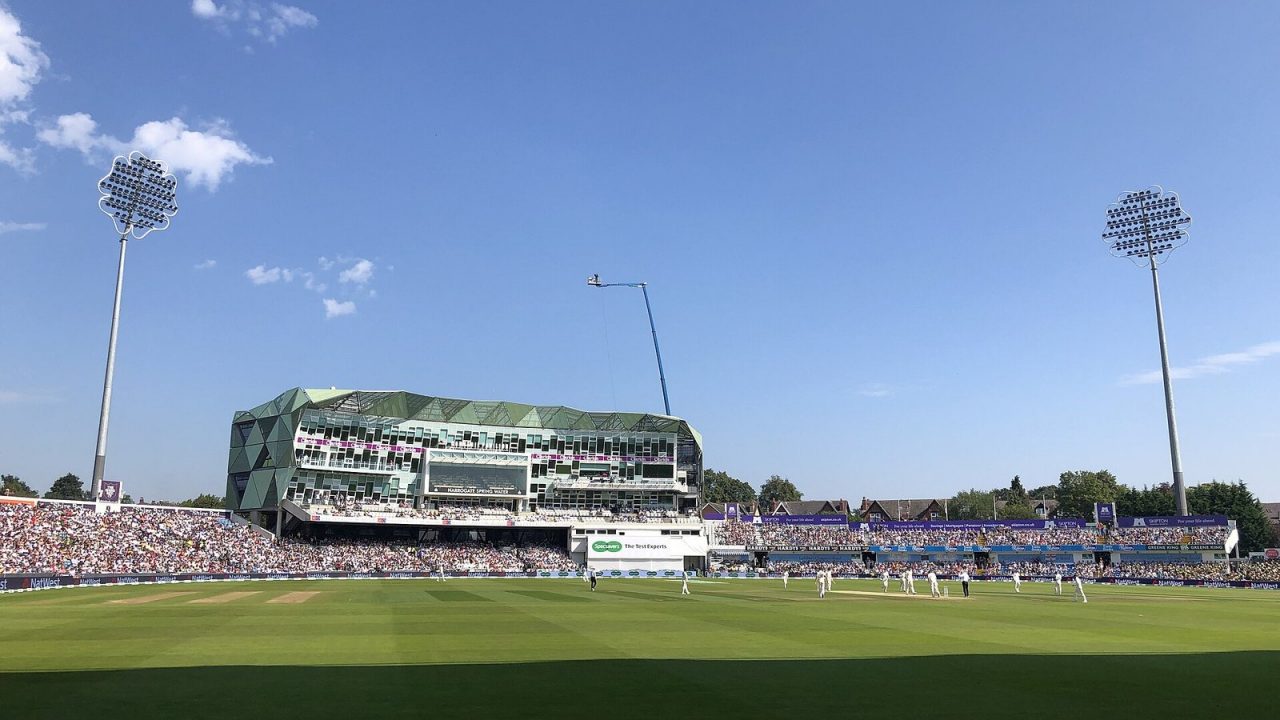
No rivalry in cricket carries the weight of the Ashes. England and Australia have been playing Test matches against each other since 1877, and for most of that time the contest has been framed around a tiny terracotta urn and a joke printed in a London newspaper. The result is a series that can make or break careers, and that both countries treat as the pinnacle of the Test calendar.
This guide explains how the Ashes began, what the urn actually is, how a series is won or retained, and the series that shaped the rivalry, with the record through the 2025–26 series in Australia. For a primer on the format the Ashes is played in, see our guide to Test, ODI and T20 cricket.
The Obituary That Started It All
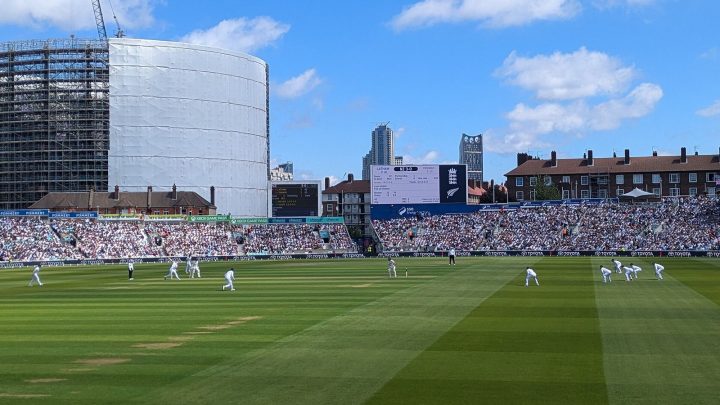
On 28 and 29 August 1882, Australia played England in a single Test at The Oval in London. England needed only 85 to win in their second innings but were bowled out short of the target, and Australia won by seven runs. Fred Spofforth, nicknamed “the Demon Bowler”, took seven wickets in each innings.
The crowd could hardly believe England had lost on home soil, and the reaction in the press was immediate. The Sporting Times published a mock obituary “In Affectionate Remembrance” of English cricket, which had “died at the Oval” on 29 August 1882. It ended with the line that gave the rivalry its name:
N.B.—The body will be cremated and the ashes taken to Australia.
That winter, England toured Australia under the captaincy of Ivo Bligh, who vowed to “recover those ashes”. England won the Test series 2–1, and the idea of a contest for the “ashes” took hold.
The Urn
During that 1882–83 tour, Bligh was presented in Melbourne with a small terracotta urn, said to contain the ashes of a burnt cricket bail. Accounts of exactly who gave it to him, and what is inside, differ — part of the legend’s appeal. Bligh kept the urn as a personal memento. After his death in 1927, his widow gave it to Marylebone Cricket Club (MCC), and it has been kept at Lord’s ever since.
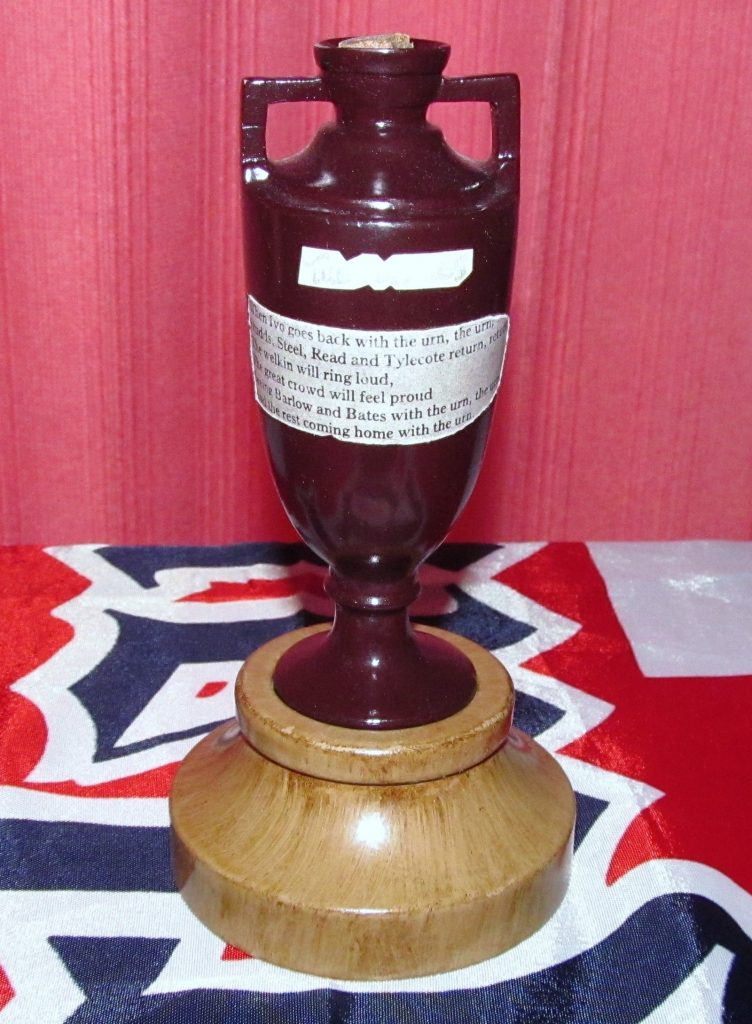
Because the urn was a private gift rather than a trophy made for the series, it is not handed to the winning team. Instead, since the 1998–99 series the winners have received the Ashes Trophy, a Waterford Crystal replica of the urn. The original, fragile and only a few inches tall, very rarely leaves Lord’s.
How an Ashes Series Works
An Ashes series is a set of Test matches, usually five, played roughly every two years and alternating between England and Australia. Each match is a standard five-day Test, with two innings per side.
Winning and retaining
The rule that makes the Ashes distinctive is that the holders keep the Ashes if a series is drawn. The challengers have to win the series outright to take them back. That changes the tactics: a team that already holds the Ashes and leads a series can settle for draws, while the other side must force results.
It also leads to two moments that fans watch for. A team “retains” the Ashes as soon as the other side can no longer win the series — for example, by going 2–0 up with two matches left when they already hold the urn. A team “regains” the Ashes when it wins a series as challenger. In 2025–26, for example, Australia retained the Ashes after winning the first three Tests, with two matches still to play — the remaining Tests in Melbourne and Sydney decided only the final margin.
Other honours
The player of the series receives the Compton–Miller Medal — in 2025–26 it went to Australia’s Mitchell Starc. Each match in a series is played at a different ground, so a five-Test series in Australia typically takes in several states, and one in England several counties.
Famous Series
1932–33: Bodyline
The most controversial series in cricket history. England, captained by Douglas Jardine, used “leg theory” — fast, short bowling aimed at the batter’s body with a packed leg-side field — largely to contain Australia’s Don Bradman. England won 4–1, but the tactics caused a diplomatic row between the two countries. The laws on leg-side fielding that followed in later decades are often traced back to it.
1981: Botham’s Ashes
England trailed 1–0, and Ian Botham was no longer captain after a poor run. What followed became one of the great individual series. In the third Test at Headingley, England were facing defeat when Botham hit an unbeaten 149 in the second innings. Australia, needing only 130, were then bowled out for 111, with Bob Willis taking 8 for 43. England went on to win the series 3–1, and the summer has been known as “Botham’s Ashes” ever since.
2005: The Return
Australia had won back the Ashes with a 4–0 series win in England in 1989 and kept them through the 1990s and early 2000s. England’s 2–1 win in 2005, in a series of extraordinarily close matches, was their first Ashes series win in 18 years and drew huge audiences in England.
2010–11: Winning down under
Winning in Australia has long been the hardest task in the rivalry for England. In 2010–11 they managed it, winning the series 3–1 — their first series victory on Australian soil for 24 years. It remains the most recent time England have won an Ashes series in Australia.
2019 and 2023: Drawn series
Both recent series in England finished 2–2. In 2019, the draw meant Australia retained the Ashes. In 2023, England levelled the series by winning the final Test at The Oval, but Australia again kept the urn as holders — a clear example of why the “holders retain” rule matters.
2025–26: Australia’s 4–1 win
The most recent series, played in Australia from 21 November 2025 to 8 January 2026, ended in a 4–1 win for the hosts. Australia won the first Test in Perth inside two days, then took the day-night second Test in Brisbane and the third in Adelaide to retain the Ashes. England hit back in the fourth Test at the MCG, winning by four wickets over two days — their first Test win in Australia in 14 years. Australia won the final Test in Sydney by five wickets. Mitchell Starc was named player of the series.
| Test | Venue | Result |
|---|---|---|
| 1st | Perth Stadium | Australia won by 8 wickets |
| 2nd (day-night) | The Gabba, Brisbane | Australia won by 8 wickets |
| 3rd | Adelaide Oval | Australia won by 82 runs |
| 4th | Melbourne Cricket Ground | England won by 4 wickets |
| 5th | Sydney Cricket Ground | Australia won by 5 wickets |
The Record: Who Has Won More?
Through the 2025–26 series, the overall Ashes record stands as follows:
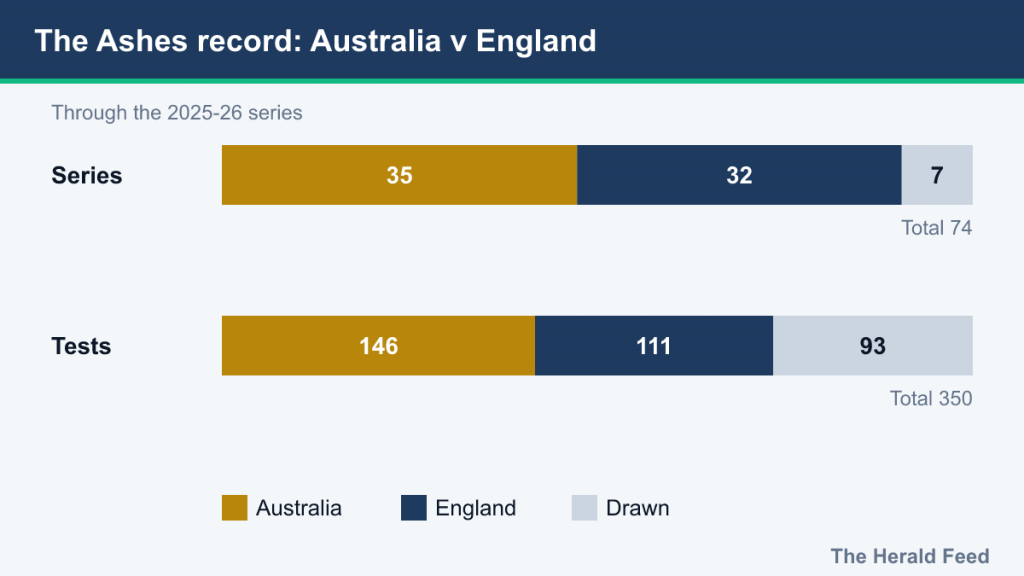
| Australia | England | Drawn | Total | |
|---|---|---|---|---|
| Series | 35 | 32 | 7 | 74 |
| Tests | 146 | 111 | 93 | 350 |
The series count is closer than many fans assume, but the Test count shows how much the balance has tilted towards Australia over time. Many of England’s series wins came in the early decades and in occasional golden periods; Australia have generally been dominant at home, where England have found it very hard to win.
Why the Ashes Still Matters
The Ashes survives as cricket’s biggest Test series for several reasons. It has the longest history, dating back to the first Test of all, played at the Melbourne Cricket Ground in March 1877, when a combined Australian XI beat James Lillywhite’s touring England side by 45 runs — five years before the obituary that gave the contest its name. It is played between two nations with deep sporting rivalry and shared cultural ties. And because it is usually five Tests long, it rewards depth and resilience rather than a single good week.
For players, an Ashes series is often how careers are remembered. For fans, it is a habit: Australian summers with Boxing Day at the MCG and the New Year Test in Sydney, English summers with Lord’s and The Oval. When the urn is at stake, even a dead rubber tends to be watched closely.
Common Questions
Do the winners actually get the urn?
No. The original urn stays at Lord’s. Winners receive the Waterford Crystal Ashes Trophy, introduced for the 1998–99 series.
What happens if the series is tied?
The team that already holds the Ashes keeps them. That is why both 2019 and 2023 ended 2–2 with Australia still holding the urn.
Are there other Ashes series?
Yes. England and Australia’s women’s teams contest the Women’s Ashes, which has its own history and format. But to most cricket fans, “the Ashes” on its own means the men’s Test series that grew out of the events of 1882.
How long is an Ashes series?
Usually five Tests, though there have been four- and six-match series in the past. A five-Test series in Australia typically runs from late November into early January, as the 2025–26 series did.
Why do people call a series win in Australia so difficult?
Conditions are unfamiliar for English players — harder, bouncier pitches, heat and long travel between venues — and Australia’s home record reflects it. Before 2010–11, England had gone 24 years without a series win there, and since then they have not won another.