Rugby Union vs Rugby League: The Key Differences
Union or league? Compare the two rugby codes: 15 vs 13 players, scoring, the six-tackle rule vs the contest for the ball, scrums, lineouts and the 1895 split.
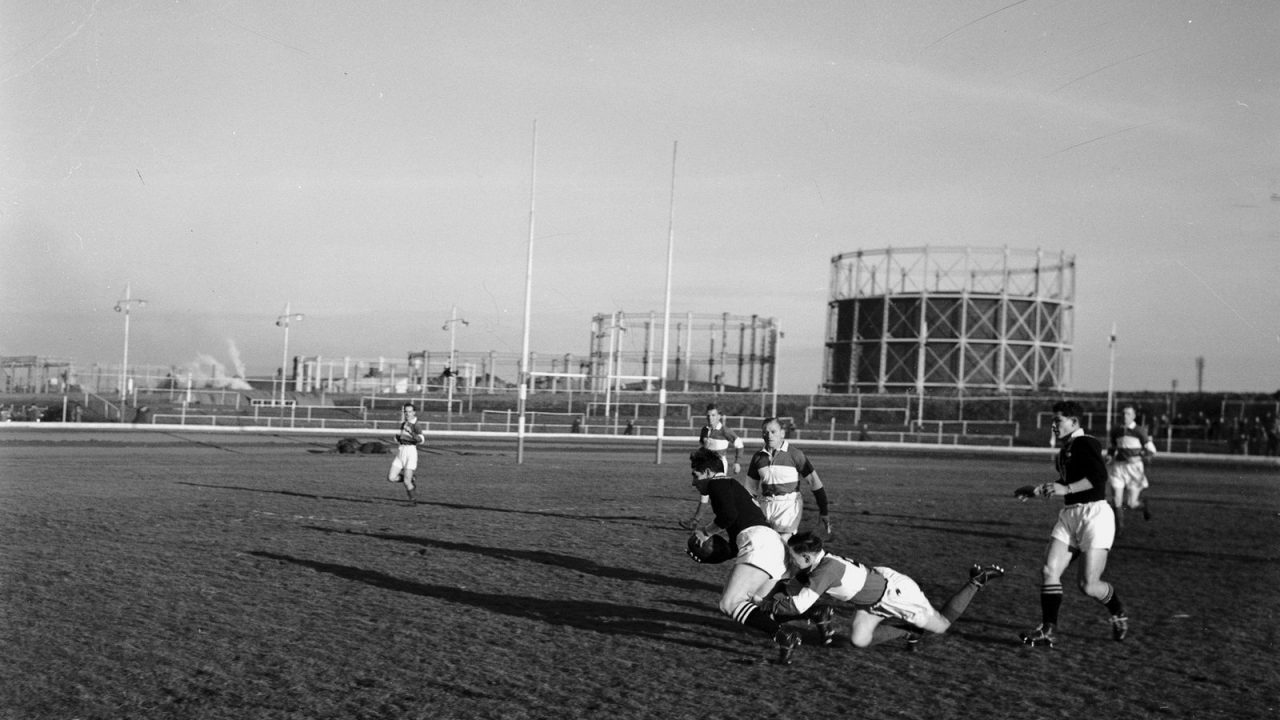
To a casual viewer, rugby union and rugby league look like the same sport: an oval ball, H-shaped posts, tries scored by grounding the ball, and plenty of physical collisions. Watch a few minutes of each, though, and the differences become obvious. League is a game of repeated sets and territory gained metre by metre; union is a game of contested possession, set pieces and long phases of play.
The two codes share a common ancestor and split in 1895. Since then they have developed separate laws, separate governing bodies and separate cultures. This guide sets out the key differences, from the number of players to how points are scored. For the basics of the 15-a-side game, see our beginner’s guide to rugby union rules.
Where the Split Came From
In the late 19th century, rugby in England was governed by the Rugby Football Union (RFU), which insisted on strict amateurism. Many clubs in the industrial north of England had working-class players who lost wages when they took time off to play. Those clubs wanted to compensate players for this “broken time”, and the RFU voted the proposal down.
On 29 August 1895, representatives of 22 clubs met at the George Hotel in Huddersfield and formed the Northern Rugby Football Union. The new body gradually changed its laws to make the game faster and more appealing to paying spectators. By the time a professional New Zealand touring team arrived in 1907, the Northern Union game already differed significantly from union, including fewer players and the play-the-ball. The organisation adopted the name Rugby Football League in 1922.
Union remained officially amateur for another century. Only on 26 August 1995 did the International Rugby Football Board declare union an “open” game, allowing players to be paid.
Numbers on the Field
The most visible difference is the size of the teams. Union has up to 15 players per side; league has 13. Under World Rugby’s laws, an international union team can name up to eight replacements. League uses interchanges, and its international rule book lets each competition decide whether interchanges are limited or unlimited, so the exact number varies.
Fewer players means more space. League has no flankers, and its positions are simpler: a full-back, two wings, two centres, a five-eighth (stand-off), a halfback (scrum-half), two props, a hooker, two second-rowers and a lock. Union has eight forwards with highly specialised set-piece roles; our guide to rugby union positions explains each one.
Scoring: How Points Differ
Both codes reward tries above everything else, but the values are different.
| Score | Rugby union | Rugby league |
|---|---|---|
| Try | 5 points | 4 points |
| Conversion | 2 points | 2 points |
| Penalty goal | 3 points | 2 points |
| Drop goal / field goal | 3 points | 1 point (2 points from beyond the 40-metre line under the NRL and international rule book) |
| Penalty try | 7 points (no conversion) | 4 points plus a conversion attempt from in front of the posts |
The effect on tactics is significant. In union, a penalty goal is worth more than half a converted try, so teams often kick for goal when they are awarded a penalty within range. In league, a penalty goal is worth just two points, so teams are more likely to kick for touch and keep the ball. The one-point field goal, meanwhile, becomes a key weapon in close league matches, especially in golden-point extra time in the NRL.
Possession: The Six-Tackle Rule vs the Contest for the Ball
This is the biggest difference between the codes, and it shapes everything else.
League: sets of six
In league, the team with the ball gets a set of six tackles. Under the rule book, a team is allowed five play-the-balls; if it is tackled a sixth time, possession is handed over to the opposition. Most teams therefore use the first five tackles to gain ground and kick on the last one to gain territory or try to score.
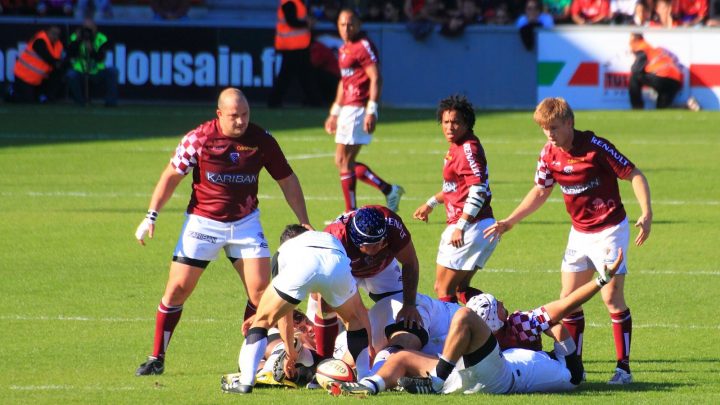
After each tackle, play restarts with a play-the-ball. The tackled player gets up, faces the opposition’s goal line, places the ball on the ground and rolls it backwards with the foot to a team-mate, known as the acting halfback. One defender may stand directly opposite as the “marker”; the rest of the defending team must retreat 10 metres. There is no contest for the ball at this point. Once a tackle is completed, no player may try to take the ball from the tackled player.
Union: contested possession
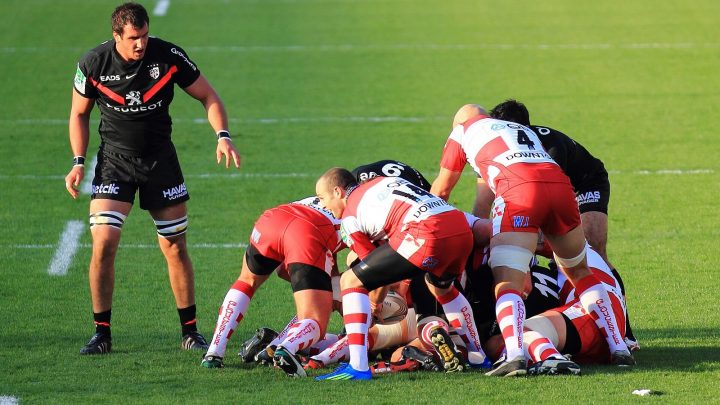
Union has no tackle count. A team can keep the ball for as many phases as it can, but it has to keep winning it. After a tackle, the tackled player must release the ball, and both teams can compete for it — through a ruck, where players drive over the ball, or by a defender winning it with their hands while staying on their feet. That contest is why union matches feature so many penalties at the breakdown, and why specialists like openside flankers are prized.
The defensive line is different too. In union, defenders at a ruck must stay behind the offside line running through the hindmost point of their own players in the ruck — often only a metre or two from the ball. League’s 10-metre retreat gives attackers a running start, which is one reason league is built on powerful forward carries.
Set Pieces: Scrums and Lineouts
Scrums
Both codes have scrums, but they mean different things. In union, the scrum is a genuine contest: eight forwards push against eight, binding and engagement are tightly regulated, and winning scrum penalties can decide matches. In league, the scrum is used to restart play after a knock-on, forward pass or the ball going into touch, and it is rarely contested in the modern professional game. It mostly serves to gather the forwards in one place and create space for the backs.
Lineouts
Union restarts play with a lineout when the ball goes into touch: forwards form two lines, the hooker throws the ball in, and jumpers are lifted to compete for it. League has no lineout. If the ball goes into touch in league, play typically restarts with a scrum, or with a handover when the ball is kicked out on the full.
Rucks and mauls
Union retains both the ruck and the maul, including the driving maul from a lineout, which is one of the most effective ways to score near the line. League removed the ruck and maul long ago, replacing them with the play-the-ball.
Kicking Rules
Both codes reward long kicks that find touch in the opposition half. League’s 40/20 rule says that if a team kicks in general play from inside its own 40-metre zone and the ball bounces into touch inside the opposition’s 20-metre zone, the kicking team restarts play with possession. NRL rules also include a 20/40 kick from inside the team’s own 20-metre zone that bounces out between the opposition’s 40-metre line and goal line.
Union has a similar idea in the 50:22, where a kick from inside a team’s own half that bounces into touch inside the opposition’s 22 gives the kicking team the throw-in at the lineout. In both codes, these rules encourage defenders to cover the back field, which opens up space for attackers.
Discipline, Officials and Drawn Games
Both codes use a ten-minute temporary suspension. In union it is the yellow card; in league the referee can “temporarily suspend for ten minutes”, universally known as the sin bin. A sending-off in league means the player takes no further part in the match. Union’s laws now include a note for elite rugby allowing a red-carded player to be replaced after 20 minutes of playing time, unless the offence was intentional or highly dangerous.
League also uses the sin bin to deal with persistent offending at the play-the-ball. Under NRL interpretations, many ruck infringements by the defending team are punished with a “six again” call, which simply restarts the tackle count, rather than a full penalty. Professional fouls and repeated infringements still bring a penalty, and the offender can be sin-binned.
Technology is used differently as well. Union’s television match official (TMO) reviews tries and foul play. The NRL refers decisions to a central “Bunker”, and each team has a Captain’s Challenge: one unsuccessful challenge per match against decisions that lead to a structured restart, such as a scrum, penalty or handover.
Finally, drawn games are handled differently. In the NRL, a regular-season match level after 80 minutes goes to “golden point” extra time, with the first score winning, for a maximum of ten minutes. Union matches outside knock-out competitions can simply end in a draw.
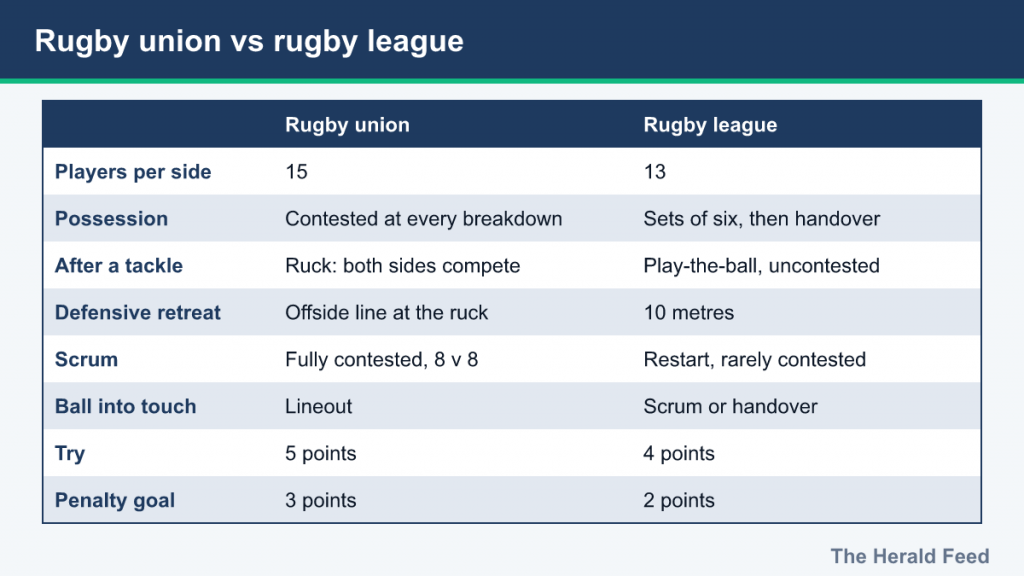
Side-by-Side Summary
| Rugby union | Rugby league | |
|---|---|---|
| Players per side | 15 | 13 |
| Possession | Contested at every breakdown | Sets of six tackles, then handover |
| After a tackle | Ruck: both sides compete for the ball | Play-the-ball: uncontested restart |
| Defensive retreat | Offside line at the ruck | 10 metres |
| Scrum | Fully contested, 8 v 8 | Restart, rarely contested |
| Ball into touch | Lineout | Scrum or handover |
| Try | 5 points | 4 points |
| Penalty goal | 3 points | 2 points |
| Governing body | World Rugby | International Rugby League |
Which Code Should You Watch?
There is no right answer, and many fans follow both. League tends to appeal to viewers who like continuous running, big collisions and clear structure — every set of six is a mini-story. Union rewards viewers who enjoy tactical variety: kicking duels, set-piece battles and the constant fight for the ball at the breakdown.
Geography matters too. League is strongest in Australia, New Zealand, Papua New Guinea, the north of England and the south of France. Union is played much more widely, with strongholds across the British Isles, France, South Africa, New Zealand, Australia, Argentina, Japan and the Pacific Islands. Both have also produced sevens and nines variants, and union sevens is now an Olympic sport.