



Despite significant government funding allocated for professional demining operations across Ukraine’s war-torn agricultural lands, a parallel underground economy has emerged to fill the gaps left by official programs. These so-called “black sappers” — unlicensed demining operators working outside legal frameworks — have become an open secret in rural communities, where farmers desperate to return their fields to productivity often see no other viable option. The phenomenon highlights both the enormous scale of Ukraine’s landmine crisis and the limitations of state-sponsored solutions in addressing what may be the largest demining challenge in modern history.
The scope of contamination across Ukrainian territory is staggering. According to estimates from international humanitarian organizations, approximately 174,000 square kilometers of Ukrainian land — an area roughly the size of Cambodia — may be contaminated with explosive remnants of war. This includes anti-personnel mines, anti-tank mines, cluster munitions, and unexploded ordnance from artillery shells and rockets. Agricultural regions in Kharkiv, Kherson, Zaporizhzhia, and Donetsk oblasts have been particularly affected, with fertile farmland rendered unusable and dangerous.
The Economics Driving Illegal Demining
The emergence of black market demining services stems from a fundamental economic reality: time is money for Ukrainian farmers, and official demining programs simply cannot keep pace with agricultural calendars. Government-certified demining operations, while thorough and safe, often involve lengthy bureaucratic processes, limited contractor availability, and prioritization systems that may leave individual farms waiting for months or even years. For a farmer whose livelihood depends on spring planting and autumn harvest, such delays can mean financial ruin.
Unofficial demining operators typically charge between $50 and $200 per hectare, depending on the suspected contamination level and regional market conditions. While this represents a significant expense, it pales in comparison to the cost of leaving productive farmland fallow for an entire growing season. Many farmers calculate that paying for illegal demining services, despite the risks, offers a better return on investment than waiting for official clearance that may never come. This cold economic calculus has created a thriving underground industry with its own supply chains, pricing structures, and informal quality standards.
The Human Cost and Legal Consequences
The dangers of unlicensed demining work cannot be overstated. Black sappers often lack proper protective equipment, standardized training, and the sophisticated detection technology used by professional demining organizations. Casualty figures among these underground operators are difficult to track, as many incidents go unreported to avoid legal consequences. However, emergency medical personnel in affected regions report treating blast injuries that bear the hallmarks of improvised demining attempts gone wrong.
Ukrainian law explicitly prohibits unauthorized handling of explosive devices, with penalties including substantial fines and imprisonment. Yet enforcement remains inconsistent, particularly in rural areas where local authorities may sympathize with farmers’ predicaments or lack resources for effective monitoring. Some legal experts argue that the current regulatory framework, designed for peacetime conditions, is fundamentally unsuited to the wartime reality facing Ukrainian agriculture. Calls for reform have emerged from agricultural associations, though any changes would need to balance safety concerns against economic imperatives.
International Response and Future Outlook
International humanitarian organizations have scaled up their presence in Ukraine significantly since the full-scale invasion began in February 2022. Groups such as the HALO Trust, Danish Demining Group, and various UN-affiliated bodies have deployed hundreds of trained deminers and invested in local capacity building. The United States, European Union, Japan, and other donors have pledged billions of dollars for demining efforts over the coming decades. Despite this influx of resources, experts estimate that fully clearing Ukrainian territory of explosive contamination could take anywhere from 30 to 50 years using current methods and funding levels.
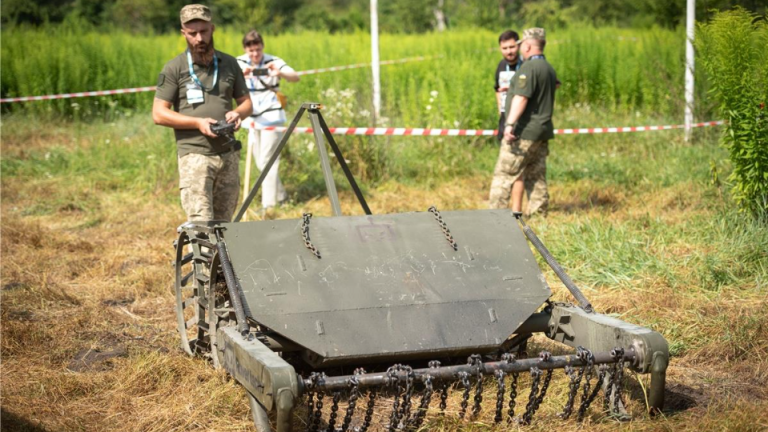
Technological innovations may accelerate this timeline. Ukrainian tech startups have developed drone-based detection systems, artificial intelligence algorithms for identifying minefield patterns, and robotic clearance vehicles. These technologies, while promising, remain largely in pilot phases and cannot yet match the scale of the problem. Until official demining capacity expands dramatically, the black market for unlicensed services will likely persist as a shadowy but essential component of Ukraine’s agricultural recovery.
Expert Opinion: The proliferation of illegal demining services in Ukraine represents a systemic failure that extends beyond simple law enforcement. As international demining capacity scales up over the next three to five years, we may see a gradual displacement of black market operators, but only if bureaucratic bottlenecks are simultaneously addressed. The most effective long-term solution will likely involve creating expedited certification programs for local operators and integrating informal networks into legitimate supply chains rather than attempting to eliminate them entirely.