


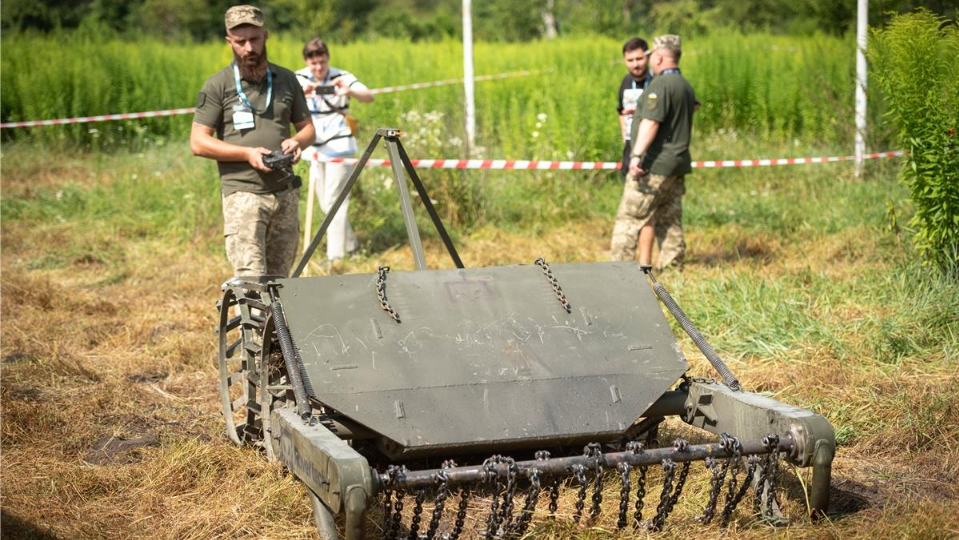
Ukraine is preparing to establish a dedicated Demining Agency that will assume responsibilities currently held by the State Emergency Service (SES), marking a significant restructuring of the country’s approach to clearing explosive remnants of war. The initiative comes as delays in launching the Unified State Register of Contaminated Territories continue to hamper demining efforts across the nation, leaving vast swaths of agricultural and residential land inaccessible and dangerous for millions of Ukrainians.
The creation of a specialized agency reflects the unprecedented scale of Ukraine’s landmine crisis, which experts describe as the worst contamination situation anywhere in the world. According to various estimates, approximately one-third of Ukrainian territory — an area roughly the size of Florida — may be contaminated with landmines, unexploded ordnance, and other explosive remnants from the ongoing conflict that began with Russia’s full-scale invasion in February 2022.
Bureaucratic Delays Impeding Critical Demining Operations
The delayed implementation of the Unified State Register of Contaminated Territories has emerged as a significant obstacle to systematic demining efforts. This digital registry is designed to map and catalog all areas affected by explosive contamination, providing crucial data for prioritizing clearance operations and coordinating the work of various demining organizations operating throughout the country. Without this centralized database, efforts remain fragmented and potentially inefficient, with different agencies and international partners sometimes working without complete information about contamination patterns.
The registry’s importance extends beyond operational coordination. It serves as a foundational tool for land management, agricultural planning, and the eventual return of displaced populations to their homes. Farmers cannot safely cultivate fields, construction projects remain stalled, and economic recovery is significantly hampered in regions where the contamination status of land remains unclear or undocumented.
International Context and the Scale of the Challenge
Ukraine’s demining challenge dwarfs previous post-conflict clearance operations. For comparison, Cambodia — previously considered the world’s most mine-affected country — has spent decades clearing an estimated four to six million landmines. Ukraine faces a contamination level that experts suggest could take several decades and billions of dollars to fully address. International organizations including the HALO Trust, Danish Demining Group, and numerous other NGOs have scaled up operations in Ukraine, but the sheer volume of contaminated territory requires a coordinated national strategy.
The World Bank has estimated that demining Ukraine could cost upwards of $37 billion over multiple decades. This figure underscores why establishing an effective, dedicated agency with clear authority and adequate resources is considered essential by both Ukrainian officials and international partners. The new agency is expected to streamline decision-making processes, reduce bureaucratic overlap, and provide clearer accountability for demining outcomes.
Humanitarian and Economic Implications
Beyond the immediate physical dangers, landmine contamination carries profound humanitarian and economic consequences. Agricultural production — a cornerstone of Ukraine’s economy and a critical component of global food security — remains severely constrained in affected regions. The Ukrainian agricultural sector, which before the war contributed significantly to global grain exports, cannot fully recover until substantial progress is made on demining.
The establishment of the new Demining Agency represents Ukraine’s recognition that addressing this crisis requires institutional innovation. By consolidating expertise and authority within a single specialized body, Ukrainian authorities hope to accelerate clearance rates, improve safety standards for demining personnel, and better coordinate the substantial international assistance flowing into the country for this purpose. The agency’s success will be measured not only by hectares cleared but by lives saved and communities restored to normalcy in the years ahead.
Expert Opinion: The creation of a dedicated demining agency signals Ukraine’s shift toward treating explosive ordnance clearance as a long-term national priority rather than an emergency response function. This institutional restructuring, combined with proper implementation of the contamination registry, could significantly accelerate clearance timelines — though realistic assessments suggest full remediation will extend well into the 2040s or beyond, requiring sustained international financial and technical support throughout.