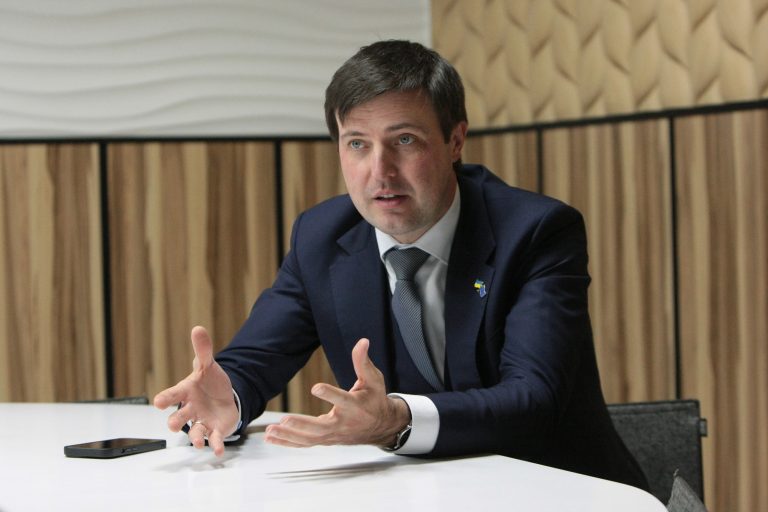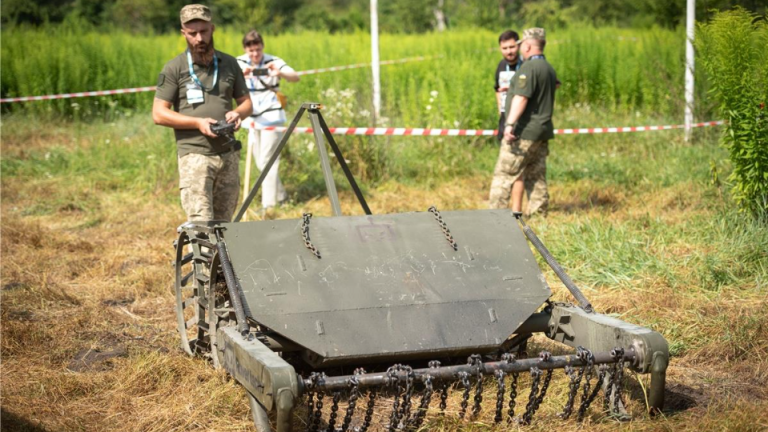
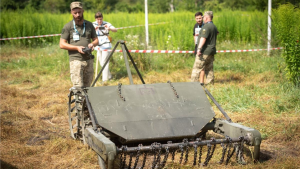



Ukraine faces one of the most daunting demining challenges in modern history, with vast swaths of its territory contaminated by explosive remnants of war following Russia’s full-scale invasion. Despite billions of dollars in international funding pledged for clearance operations, critical administrative failures are hampering progress. In a recent interview, Ukraine’s Deputy Minister of Economy revealed the stark reality: while financial resources exist, the absence of a functioning national registry of contaminated lands continues to obstruct systematic demining efforts across the country.
The scale of contamination is staggering. According to Ukrainian government estimates, approximately 174,000 square kilometers of Ukrainian territory — roughly 30% of the country’s total land area — may be contaminated with mines, unexploded ordnance, and other explosive remnants of war. This makes Ukraine one of the most mine-affected countries in the world, surpassing even decades-long conflict zones like Afghanistan and Cambodia in terms of contaminated territory.
The Missing Registry: A Years-Long Administrative Failure
Central to Ukraine’s demining challenges is the persistent absence of a comprehensive national registry of contaminated territories. Such a database would allow authorities to systematically track which areas require clearance, prioritize operations based on agricultural and economic importance, and coordinate efforts among dozens of international and domestic demining organizations operating in the country. Despite years of planning and multiple government initiatives, this crucial tool remains non-functional. The Deputy Minister acknowledged that bureaucratic obstacles, inter-agency coordination failures, and technical challenges have repeatedly delayed the registry’s implementation, even as the contaminated area continues to expand with each month of ongoing conflict.
The lack of a centralized registry creates cascading problems throughout the demining ecosystem. International donors struggle to allocate resources effectively without clear data on contamination patterns. Demining operators sometimes duplicate efforts in certain areas while leaving other critical zones untouched. Agricultural producers cannot make informed decisions about which lands are safe to cultivate, resulting in both dangerous farming practices and unnecessary abandonment of potentially productive fields.
International Funding and the Black Market Problem
The international community has responded generously to Ukraine’s demining needs. The United States, European Union, Japan, and numerous other countries have committed billions of dollars to support clearance operations. The World Bank has established dedicated funding mechanisms, while private foundations and humanitarian organizations have mobilized unprecedented resources. Yet money alone cannot solve the problem. Without proper coordination infrastructure, including the missing registry, these funds cannot achieve their full potential impact.
Perhaps more troubling is the emergence of “black demining” — unauthorized clearance operations conducted by untrained individuals or unregulated private entities. Driven by the urgent need to return agricultural land to production and the potential profits from scrap metal recovery, some Ukrainians have taken matters into their own hands, conducting dangerous amateur demining operations. This phenomenon not only puts lives at risk but also complicates official clearance efforts, as areas “cleared” by unqualified operators may retain hidden dangers while being falsely marked as safe. The Deputy Minister emphasized that addressing this shadow industry requires both stricter enforcement and faster expansion of legitimate demining capacity.
The Path Forward: Urgency and Reform
Experts estimate that even under optimal conditions, clearing Ukraine’s contaminated territories could take decades and cost tens of billions of dollars. The longer systematic efforts are delayed, the greater the human and economic toll. Farmers unable to access their fields face financial ruin, while civilians continue to die and suffer injuries from explosive encounters — including children who mistake colorful cluster munition submunitions for toys. The Ukrainian government has pledged to accelerate registry development and improve coordination mechanisms, but concrete progress remains elusive. International partners are increasingly conditioning future funding on demonstrable improvements in administrative capacity, creating additional pressure for reform.
The demining challenge extends beyond immediate safety concerns to Ukraine’s long-term economic recovery and food security. As one of the world’s leading grain exporters, Ukraine’s agricultural sector is vital not only to its own economy but to global food supplies. Every hectare that remains contaminated represents lost productive capacity with worldwide implications. Successfully addressing this challenge will require not just continued international support and funding, but fundamental reforms in how Ukraine manages and coordinates its demining operations.
Expert Opinion: The Ukrainian demining crisis represents a critical test case for international humanitarian coordination in active conflict zones. Without immediate establishment of the contaminated lands registry and improved coordination mechanisms, even substantial international funding will fail to achieve meaningful results. The window for preventing a generational contamination crisis is narrowing rapidly, and administrative reform must be prioritized alongside operational expansion.