


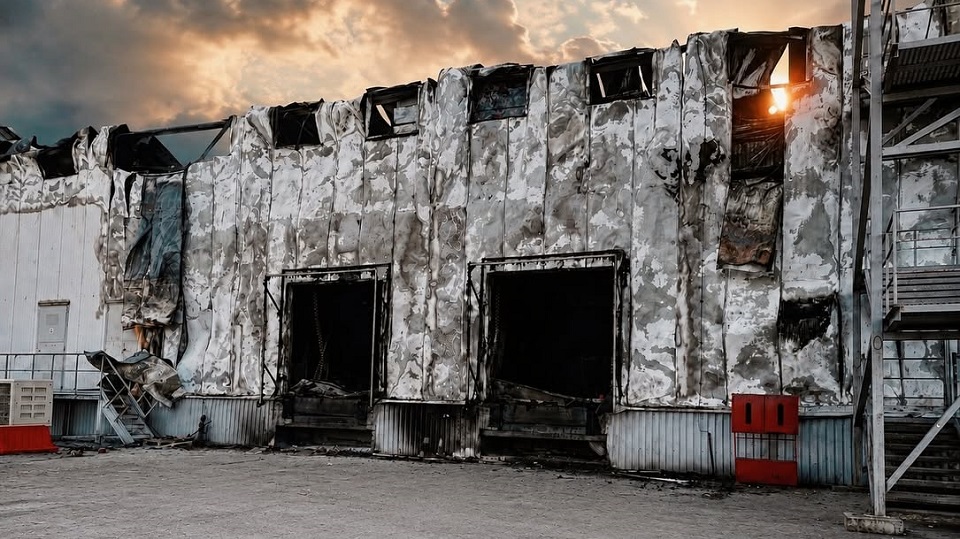
A significant Russian military strike has caused extensive damage to warehouses belonging to two major Ukrainian businesses — the EKO Market retail chain and the Danube Agrarian agricultural company. According to initial reports, a substantial portion of stored products was destroyed in the attack. In a fortunate turn of events, no workers were injured during the strike, as emergency protocols and evacuation procedures were successfully implemented.
The attack represents another devastating blow to Ukraine’s civilian infrastructure and economic sector, which has been repeatedly targeted since the full-scale Russian invasion began in February 2022. Both companies play crucial roles in Ukraine’s food supply chain, with EKO Market serving as one of the country’s prominent grocery retailers and Danube Agrarian operating as a significant player in the agricultural sector.
Impact on Ukrainian Food Supply and Retail Sector
EKO Market is a well-established Ukrainian retail chain that operates numerous supermarkets across the country, providing essential food products and household goods to millions of Ukrainian consumers. The destruction of their warehouse facilities poses significant challenges for maintaining supply chains and ensuring continued access to groceries for local populations. Retail experts note that such attacks create ripple effects throughout the entire distribution network, potentially leading to temporary shortages and increased prices for consumers.
The Danube Agrarian company operates in one of Ukraine’s most agriculturally productive regions, near the Danube River delta. This area has historically been vital for grain production, vegetable cultivation, and various other agricultural activities. The damage to their storage facilities could affect not only domestic food supplies but also Ukraine’s ability to export agricultural products — a crucial source of foreign currency for the war-torn nation. Ukraine remains one of the world’s largest grain exporters, and any disruption to agricultural infrastructure has international implications for global food security.
Systematic Targeting of Civilian Infrastructure
This latest attack fits into a broader pattern of Russian military strategy that has increasingly focused on destroying Ukraine’s civilian and economic infrastructure. Since the beginning of the full-scale invasion, Russian forces have repeatedly struck energy facilities, transportation hubs, port infrastructure, and food storage facilities across the country. Military analysts suggest these attacks are designed to weaken Ukraine’s economy, demoralize the civilian population, and disrupt the country’s ability to sustain its defense efforts over an extended period.
International observers and human rights organizations have documented thousands of such strikes on civilian infrastructure, many of which may constitute violations of international humanitarian law. The deliberate targeting of food storage and distribution facilities raises particular concerns, as access to food is protected under various international conventions. Ukrainian officials have consistently called for increased air defense capabilities to protect critical infrastructure from such attacks, and Western allies have responded with deliveries of various air defense systems, though gaps in coverage remain.
Resilience and Recovery Efforts
Despite the destruction, both companies are expected to begin recovery operations immediately, demonstrating the resilience that Ukrainian businesses have shown throughout the conflict. The fact that no employees were harmed suggests that early warning systems and safety protocols functioned effectively, allowing workers to evacuate before the strike. Ukrainian businesses have developed increasingly sophisticated emergency response procedures over the past years of conflict, saving countless lives in the process. Government officials have pledged support for affected enterprises, and various international assistance programs exist to help Ukrainian companies rebuild damaged facilities. The long-term economic impact of such repeated attacks, however, continues to accumulate, presenting significant challenges for Ukraine’s post-war reconstruction.
Expert Opinion: The systematic targeting of food storage and retail infrastructure represents a calculated effort to undermine Ukraine’s economic resilience and civilian morale. As winter approaches, such attacks on the food supply chain become particularly concerning, and we can expect Ukraine’s allies to prioritize delivery of additional air defense systems to protect critical civilian infrastructure. The international community must also prepare substantial reconstruction assistance for Ukraine’s agricultural and retail sectors once the conflict ends.