


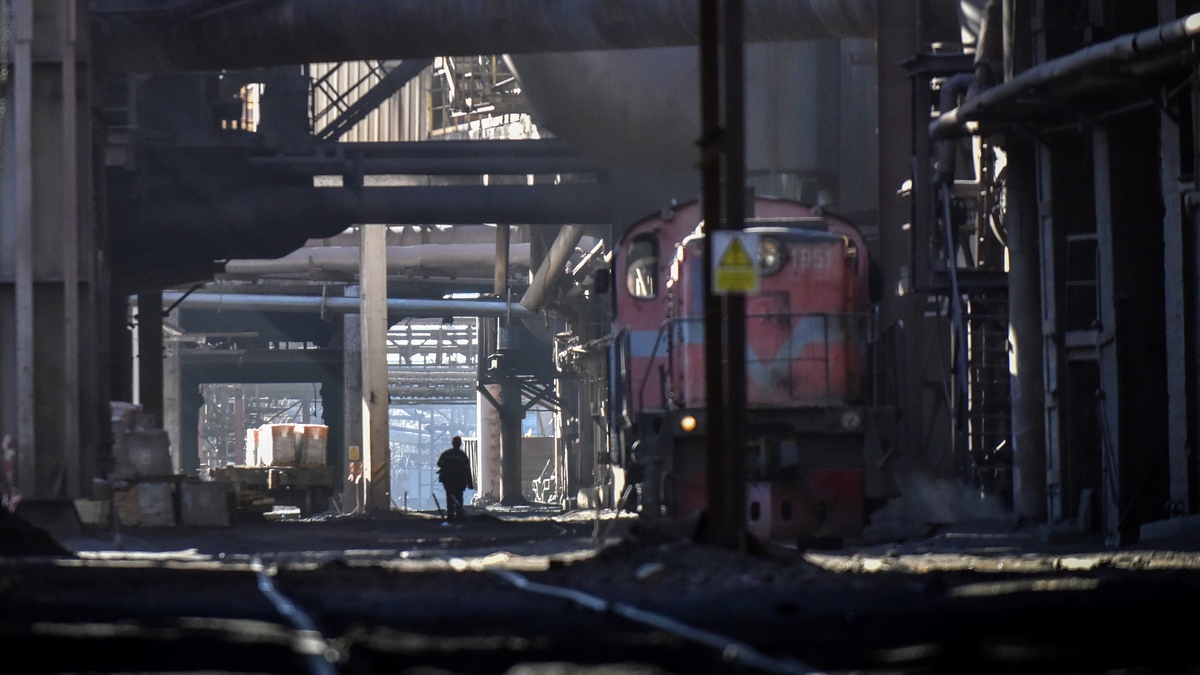
Ukrainian steel giant Metinvest has released a statement regarding the prospects for resuming operations at Zaporizhstal, one of Ukraine’s largest metallurgical plants, following a devastating Russian missile attack on August 11. Company officials have drawn stark comparisons between the current damage and the destruction witnessed during World War II, underscoring the severity of the assault on this critical industrial facility. The attack represents one of the most significant strikes against Ukraine’s steel industry since the full-scale invasion began in February 2022.
The Zaporizhstal integrated iron and steel works, located in the city of Zaporizhzhia in southeastern Ukraine, has been a cornerstone of the country’s industrial capacity for nearly a century. Founded in 1933, the plant has survived multiple conflicts and periods of upheaval, but company representatives suggest that the damage from the recent attack rivals some of the darkest moments in its history. The comparison to World War II-era destruction carries particular weight, as the facility was heavily damaged during the Nazi occupation and required extensive reconstruction in the post-war period.
Extent of Damage and Recovery Challenges
While Metinvest has not disclosed specific details about which production units were affected or the exact financial cost of the damage, the World War II comparison suggests that critical infrastructure, including blast furnaces, rolling mills, and auxiliary systems, may have sustained substantial harm. The restoration of such complex metallurgical equipment typically requires specialized components, many of which must be manufactured to order or sourced from international suppliers. This logistical challenge is further complicated by ongoing hostilities and supply chain disruptions affecting Ukraine’s industrial sector.
Industry experts note that modern integrated steel plants are highly interconnected systems where damage to one component can cascade throughout the production chain. Blast furnaces, which operate continuously at extremely high temperatures, are particularly vulnerable to sudden shutdowns caused by power disruptions or structural damage. Restarting such equipment after an emergency stop can take weeks or even months, depending on the extent of internal damage to refractory linings and other critical components.
Strategic Importance of Ukrainian Steel Industry
Before the full-scale invasion, Ukraine ranked among the world’s top fifteen steel-producing nations, with the industry contributing approximately 10% of the country’s GDP and accounting for a significant portion of export revenues. Zaporizhstal, along with other Metinvest facilities, played a crucial role in this ecosystem, producing steel products for both domestic consumption and international markets. The systematic targeting of such facilities by Russian forces represents not only an economic attack but also a strategic effort to undermine Ukraine’s industrial base and revenue-generating capacity.
Metinvest, controlled by Ukrainian billionaire Rinat Akhmetov, has faced extraordinary challenges since the invasion began. The company lost operational control of its massive Azovstal plant in Mariupol following the city’s fall in May 2022, and other facilities have faced repeated attacks, power outages, and workforce displacement. Despite these obstacles, the company has continued to maintain operations where possible and has invested in supporting Ukraine’s defense and humanitarian efforts throughout the conflict.
Path Forward and International Support
The timeline for Zaporizhstal’s restoration remains uncertain, with company officials indicating that comprehensive damage assessments are still ongoing. The reconstruction effort will likely require substantial investment, potentially running into hundreds of millions of dollars, as well as continued international support for Ukraine’s industrial recovery. Various European partners and international financial institutions have expressed interest in supporting Ukraine’s post-war reconstruction, though the ongoing nature of the conflict complicates long-term planning and investment decisions.
The attack on Zaporizhstal also raises broader questions about the protection of critical infrastructure during armed conflicts. International humanitarian law provides certain protections for civilian industrial facilities, though enforcement mechanisms remain limited in practice. As Ukraine continues to defend against Russian aggression, the resilience and eventual recovery of its industrial sector will be crucial for the country’s economic stability and long-term reconstruction prospects.
Expert Opinion: The comparison to World War II damage signals that Zaporizhstal faces a recovery timeline measured in years rather than months. Given the ongoing security situation and the complexity of modern metallurgical systems, full restoration will likely require sustained international investment and a meaningful reduction in hostilities. This attack further demonstrates Russia’s strategy of targeting Ukraine’s economic infrastructure to weaken the country’s capacity for prolonged resistance and post-war recovery.