


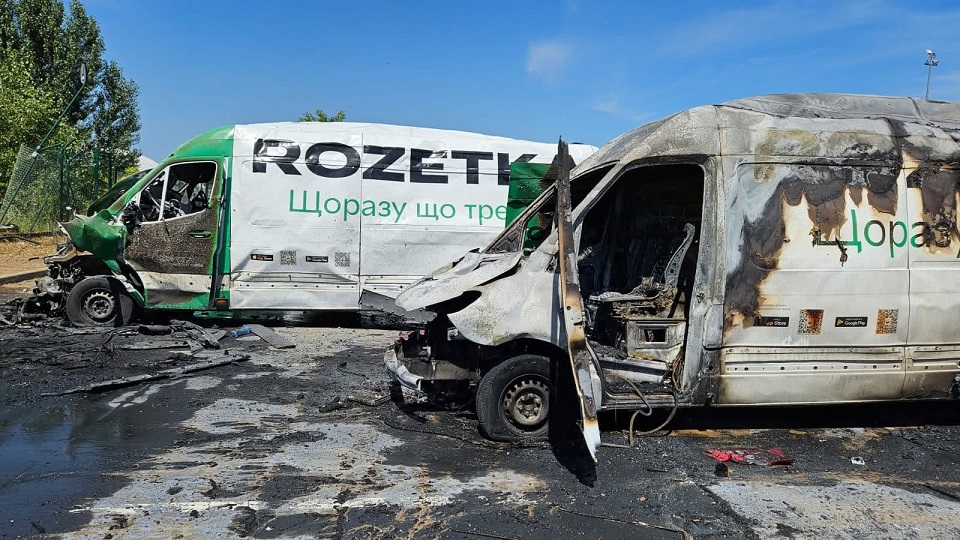
Two of Ukraine’s largest retail chains, Epicenter and Rozetka, have formally requested government assistance after Russian military strikes destroyed their warehouse facilities. The companies are seeking access to the state-subsidized “5-7-9” lending program and tax relief measures to help them recover from the devastating attacks that have significantly impacted their operations and supply chains across the country.
The requests come in the wake of targeted strikes on major logistics hubs that have become increasingly common as Russia continues to target civilian infrastructure. These attacks have not only caused billions of hryvnias in direct damages but have also disrupted the flow of essential goods to millions of Ukrainian consumers who depend on these retail networks for everyday necessities.
The Scale of Destruction and Economic Impact
The destruction of warehouse facilities belonging to Epicenter and Rozetka represents a significant blow to Ukraine’s retail sector. Epicenter, founded in 2003, has grown to become one of the largest home improvement and construction retail chains in Ukraine, operating hypermarkets across the country with an extensive logistics network. Rozetka, established in 2005, evolved from an online electronics retailer into the nation’s leading e-commerce platform, often compared to Amazon in terms of its market dominance and range of products.
Industry analysts estimate that the combined warehouse capacity destroyed in recent attacks amounts to hundreds of thousands of square meters of storage space. These facilities housed not only consumer goods but also critical inventory for agricultural supplies, construction materials, and household essentials. The loss has forced both companies to reroute supply chains, delay deliveries, and in some cases, temporarily suspend operations in affected regions.
The 5-7-9 Program: A Lifeline for Businesses
The “5-7-9” program, which the retail giants are seeking access to, is a government initiative launched in 2020 to provide affordable financing to Ukrainian businesses. The program offers loans at reduced interest rates of 5%, 7%, or 9% depending on the size of the enterprise and the purpose of the loan. Originally designed to support small and medium-sized businesses, the program has been expanded during the war to help companies affected by Russian aggression rebuild and maintain operations.
For large corporations like Epicenter and Rozetka, access to such preferential lending terms could provide crucial capital for rebuilding destroyed infrastructure without taking on unsustainable debt burdens. The companies argue that despite their size, the scale of destruction they have faced warrants exceptional government support, particularly given their role as major employers and essential service providers to the Ukrainian population.
Tax Relief and Broader Policy Implications
Beyond access to subsidized loans, both retail chains are requesting tax relief measures that would ease their financial burden during the reconstruction period. Such measures could include temporary exemptions from certain taxes, extended payment deadlines, or accelerated depreciation allowances for rebuilt assets. These requests align with broader calls from Ukraine’s business community for a comprehensive support framework for war-affected enterprises.
The government faces a delicate balancing act in responding to these requests. While supporting major employers and maintaining retail infrastructure is crucial for civilian morale and economic stability, extending preferential programs to large corporations could strain limited state resources and raise questions about fairness to smaller businesses facing similar challenges. Economic advisors suggest that any assistance package should include conditions requiring companies to maintain employment levels and continue serving communities in frontline regions.
Looking Forward: Resilience and Recovery
The appeals from Epicenter and Rozetka highlight the broader challenges facing Ukraine’s private sector as the war continues. Many businesses have demonstrated remarkable resilience, adapting their operations, relocating facilities westward, and finding creative solutions to maintain services. However, the cumulative toll of repeated attacks on infrastructure is testing the limits of corporate endurance. International partners and financial institutions have expressed willingness to support Ukrainian businesses, but domestic policy frameworks remain essential for channeling this support effectively. The government’s response to these high-profile requests will likely set precedents for how Ukraine approaches private sector recovery both during and after the conflict.
Expert Opinion: The Ukrainian government will likely develop a hybrid support mechanism that balances the legitimate needs of major retail employers with fiscal constraints. Expect a conditional assistance package that ties preferential lending and tax relief to commitments on job preservation and continued service to affected communities. This approach could serve as a template for broader post-war reconstruction partnerships between the state and private sector.