



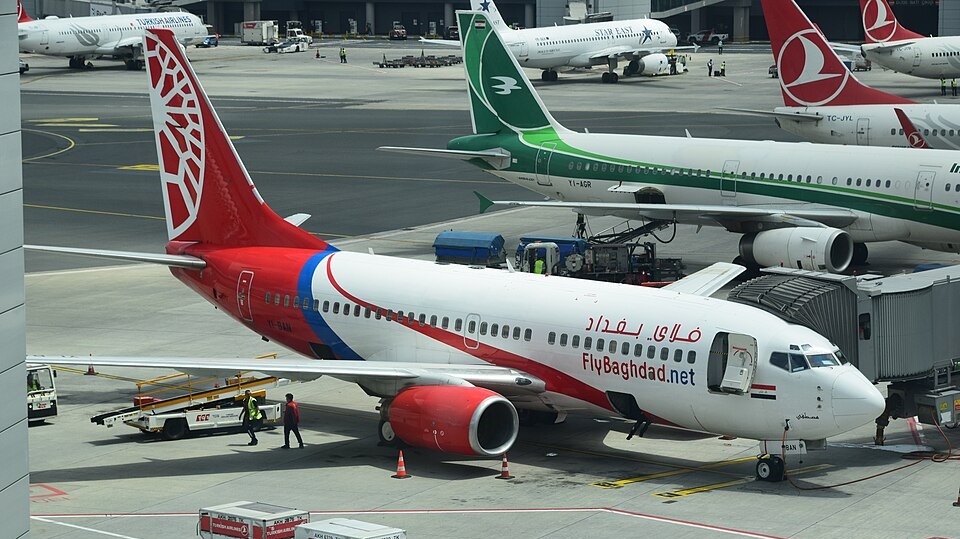
In a significant policy shift, the United States has lifted sanctions against Fly Baghdad, an Iraqi commercial airline that was previously blacklisted over allegations of transporting weapons and equipment for Iran’s Islamic Revolutionary Guard Corps (IRGC). The decision marks a notable change in Washington’s approach to Iraqi aviation companies that have been caught in the crosshairs of broader U.S.-Iran tensions. However, the company’s top executive remains under American restrictions, indicating that Washington continues to maintain pressure on individuals allegedly connected to Iranian military activities.
The removal of sanctions from Fly Baghdad comes as part of ongoing efforts to recalibrate U.S. policy in the Middle East while still targeting what American officials consider to be malign Iranian influence in the region. Bashir al-Shabbani, the airline’s CEO and owner, remains subject to American sanctions, suggesting that while the corporate entity has been delisted, concerns about individual involvement in sanctioned activities persist.
Background on the Sanctions Regime
Fly Baghdad was originally placed on the U.S. Treasury Department’s sanctions list as part of Washington’s maximum pressure campaign against Iran and its network of proxies throughout the Middle East. The airline, which operates commercial flights within Iraq and to regional destinations, was accused of facilitating the transport of weapons, personnel, and military equipment on behalf of the IRGC’s Quds Force. This elite unit of the Revolutionary Guards is responsible for Iran’s extraterritorial military operations and has been designated as a foreign terrorist organization by the United States since 2019.
The sanctions imposed on Fly Baghdad were part of a broader effort to disrupt what U.S. officials describe as Iran’s use of commercial aviation infrastructure to support its military activities across the region, including in Syria, Lebanon, and Yemen. Similar measures have been taken against other airlines and logistics companies throughout the Middle East that Washington suspects of serving dual commercial and military purposes. Being placed on the sanctions list effectively cut off the airline from the global dollar-based financial system and prohibited American companies and individuals from doing business with the carrier.
Strategic Implications for U.S.-Iraq Relations
The decision to remove sanctions from Fly Baghdad while keeping its owner under restrictions represents a carefully calibrated approach by the U.S. government. This move could be interpreted as an attempt to reduce collateral economic damage to Iraq’s aviation sector while still maintaining pressure on individuals allegedly linked to Iranian military activities. Iraq has long struggled to balance its relationships with both the United States and neighboring Iran, and sanctions on Iraqi companies have complicated this delicate diplomatic balancing act.
Iraq’s civil aviation sector has faced numerous challenges since the 2003 U.S.-led invasion, including infrastructure damage, security concerns, and international restrictions. The removal of sanctions from Fly Baghdad could provide some relief to the country’s commercial aviation industry, which serves as a crucial link for business travel and commerce in the region. However, the continued sanctions on al-Shabbani may create operational and financial complications for the airline going forward, as international banks and business partners may remain cautious about engaging with a company whose principal owner is still blacklisted.
The Broader Context of Iranian Influence
The IRGC and its Quds Force have built an extensive network of allied militias and proxy forces throughout the Middle East, often referred to as the “Axis of Resistance.” This network includes Hezbollah in Lebanon, various Shiite militia groups in Iraq, the Houthis in Yemen, and armed factions in Syria. The United States has long sought to disrupt the logistics and supply chains that support these groups, with aviation companies being one focus of these efforts. The Trump administration significantly expanded the use of sanctions as a tool against Iranian-linked entities, and subsequent administrations have continued many of these policies while making selective adjustments.
For Iraq specifically, the presence of Iran-aligned Popular Mobilization Forces (PMF) has created ongoing tensions with the United States. These militias, which were officially incorporated into Iraq’s security apparatus after helping defeat ISIS, maintain close ties to Tehran and have been accused of attacks on U.S. personnel and facilities in Iraq. The sanctions and subsequent delisting of companies like Fly Baghdad reflect the complex challenge of separating legitimate Iraqi commercial activity from alleged Iranian military support networks operating within the country.
Expert Opinion: The selective removal of sanctions on Fly Baghdad while maintaining restrictions on its owner signals a more nuanced U.S. approach to Iraqi commercial entities caught in the U.S.-Iran standoff. This calibrated strategy may aim to reduce economic pressure on Iraq’s civilian infrastructure while preserving leverage over individuals allegedly facilitating Iranian military logistics. Going forward, similar targeted adjustments could become more common as Washington seeks to balance counterterrorism objectives with maintaining functional economic relationships in strategically important countries.