


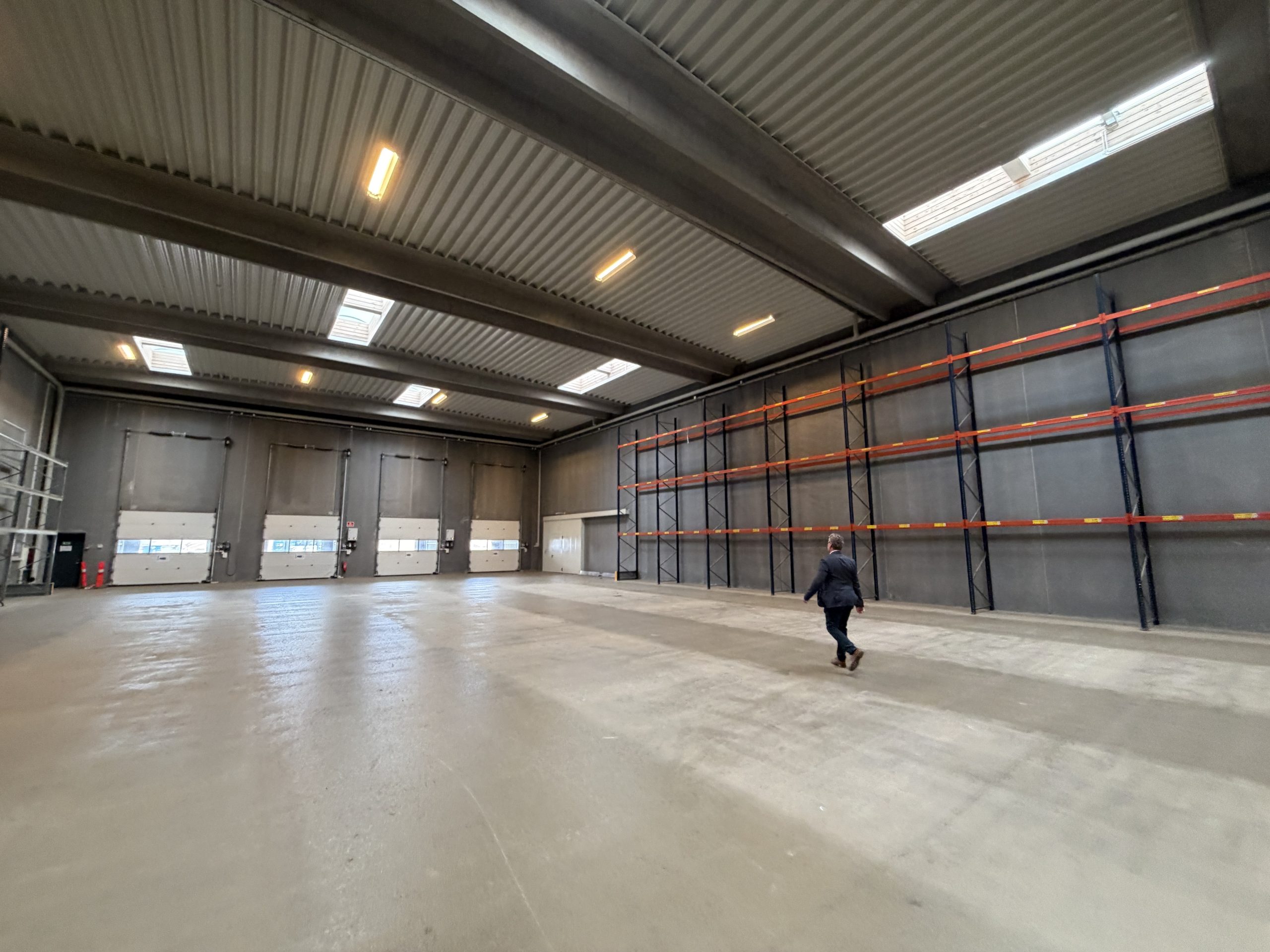
Ukrainian defense technology company Fire Point has unveiled details about its upcoming rocket fuel production facility in Denmark, marking a significant expansion of European defense manufacturing capabilities. The company announced that the main production hall will feature reinforced concrete walls measuring 90 centimeters thick, a critical safety measure designed to contain potential incidents and protect workers at the highly sensitive facility. This announcement comes as European nations increasingly seek to bolster their domestic defense production capacity amid ongoing geopolitical tensions on the continent.
Safety Standards and Engineering Specifications
The decision to construct walls nearly a meter thick reflects the inherent dangers associated with rocket propellant manufacturing. Solid rocket fuel production involves handling volatile chemical compounds that require extreme precision and multiple layers of protection. Industry standards for such facilities typically mandate blast-resistant construction capable of containing explosions and preventing chain reactions that could affect adjacent structures or surrounding communities. The 90-centimeter specification places this facility among the most robustly constructed propellant plants in Europe, demonstrating Fire Point’s commitment to meeting or exceeding international safety protocols for hazardous materials processing.
Modern rocket fuel manufacturing facilities incorporate numerous additional safety features beyond thick walls, including automated handling systems, remote monitoring capabilities, and compartmentalized production zones. These measures ensure that even in worst-case scenarios, damage remains contained and personnel can evacuate safely. The Danish facility is expected to incorporate state-of-the-art fire suppression systems and environmental controls specifically designed for propellant production environments.
Strategic Significance for European Defense
Fire Point’s expansion into Denmark represents a broader trend of defense industry investment across NATO member states. Following the outbreak of conflict in Ukraine in 2022, European governments have dramatically increased defense spending and actively encouraged the establishment of new manufacturing capabilities within their borders. Denmark, as a NATO founding member with a strong commitment to collective defense, offers an attractive location for such sensitive production facilities due to its political stability, skilled workforce, and strategic position in Northern Europe.
The establishment of rocket fuel production capacity in Denmark also addresses concerns about supply chain vulnerabilities that became apparent during recent global disruptions. By distributing critical defense manufacturing across multiple European locations, NATO allies reduce their dependence on any single source and improve their ability to sustain military operations during extended conflicts. This diversification strategy has become a cornerstone of European defense planning in recent years, with billions of euros allocated to expanding domestic production of ammunition, missiles, and related components.
Fire Point’s Growing Role in Defense Manufacturing
Fire Point has emerged as an increasingly important player in the European defense sector, leveraging Ukrainian expertise in rocket and missile technology developed over decades. Ukraine inherited significant aerospace and defense manufacturing capabilities following the dissolution of the Soviet Union, including facilities that produced components for intercontinental ballistic missiles and space launch vehicles. Companies like Fire Point represent the continuation and evolution of this technical heritage, now directed toward supporting democratic nations’ defense needs.
The company’s decision to establish production facilities outside Ukraine reflects both practical considerations related to the ongoing conflict and a strategic vision for long-term growth. By building manufacturing capacity in NATO countries, Fire Point ensures continuity of operations regardless of conditions in Ukraine while also gaining access to European markets and supply chains. This approach has been replicated by several Ukrainian defense firms, creating a distributed network of production capabilities that strengthens both Ukrainian defense capacity and broader European security.
Expert Opinion: The Fire Point facility in Denmark signals a fundamental shift in European defense industrial strategy, moving from dependence on distant suppliers to robust domestic production networks. The substantial investment in safety infrastructure, particularly the 90cm blast-resistant walls, indicates this facility is designed for long-term, large-scale production rather than temporary wartime measures. Analysts expect similar projects across Northern and Eastern Europe as NATO members race to rebuild stockpiles depleted by support for Ukraine.