
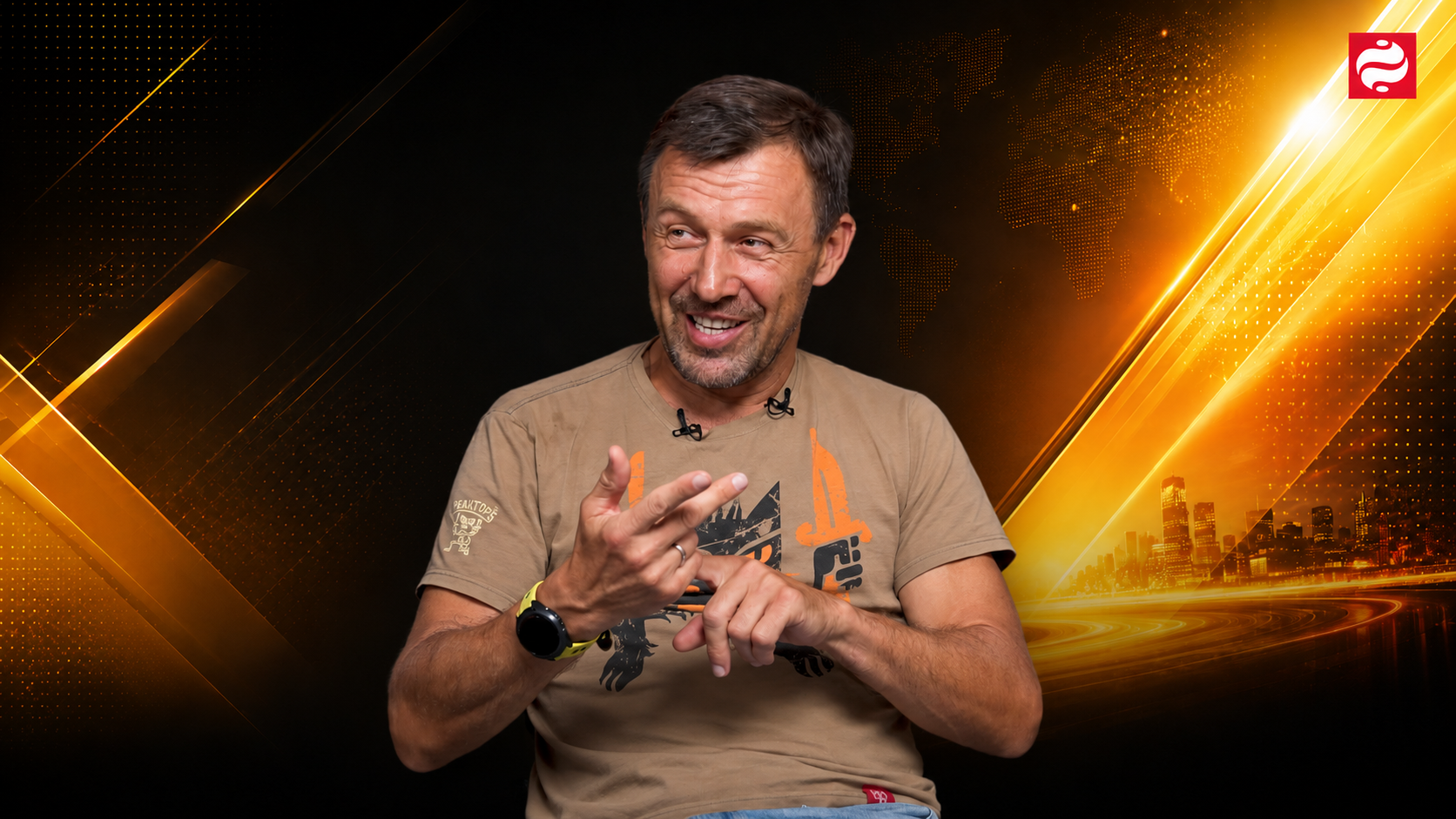
In the fifth episode of the podcast “Money of War,” Ukrainian military blogger and public figure Serhiy Onystrrat delivered a scathing commentary on the ongoing corruption scandal surrounding Sense Bank and recent statements made by Deputy Prime Minister and Minister of Digital Transformation Mykhailo Fedorov. The discussion highlights growing concerns among Ukrainian civil society about the impact of high-level corruption on the country’s ability to sustain its defense against Russian aggression. As Ukraine continues to rely heavily on Western military and financial aid, internal corruption scandals threaten to undermine international confidence in the country’s governance.
The podcast episode comes amid fresh revelations from Ukraine’s National Anti-Corruption Bureau (NABU), which has released new audio recordings allegedly implicating officials in questionable dealings related to Sense Bank, formerly known as Alfa-Bank Ukraine. The recordings have sparked intense public debate about accountability within Ukrainian institutions during wartime. Onystrrat, known for his direct and often confrontational commentary style, did not mince words when addressing what he views as a systemic failure that could have devastating consequences for Ukraine’s war effort.
The Sense Bank Controversy Explained
Sense Bank has been at the center of controversy since its nationalization following Russia’s full-scale invasion in February 2022. The bank, which was previously owned by Russian oligarchs with ties to the Kremlin, was taken over by the Ukrainian government as part of wartime measures to seize assets connected to the aggressor state. However, questions have emerged about how the nationalization process was conducted and whether certain officials may have benefited improperly from the transfer of assets. The NABU recordings allegedly shed light on behind-the-scenes negotiations and decision-making processes that deviate from official accounts.
Critics argue that the handling of Sense Bank represents a broader pattern of opacity in how Ukraine manages seized Russian assets and state-controlled enterprises during wartime. While the government maintains that all actions were taken in accordance with legal procedures designed to protect national security interests, anti-corruption activists have demanded greater transparency. The release of the NABU recordings has intensified calls for independent investigations and has put pressure on officials mentioned in the audio to provide explanations for their apparent involvement.
Fedorov’s Statements Draw Sharp Criticism
Minister Mykhailo Fedorov, who has been widely praised internationally for his innovative approaches to digital governance and his successful efforts to rally tech industry support for Ukraine, found himself in the crosshairs of criticism following statements he made regarding the scandal. While the specific nature of Fedorov’s comments was not detailed in the podcast summary, Onystrrat’s response suggests that the minister’s remarks were perceived as dismissive or insufficiently addressing the gravity of the corruption allegations. This represents a notable shift in public perception of a minister who has largely enjoyed positive coverage for his role in Ukraine’s digital transformation initiatives.
The criticism of Fedorov illustrates the heightened expectations that Ukrainian society places on its leaders during wartime. Citizens and commentators alike have shown decreasing tolerance for any perceived deviations from the standards of integrity that they believe should govern a nation fighting for its survival. The contrast between Ukraine’s international image as a plucky defender of democracy and recurring domestic corruption scandals creates a cognitive dissonance that public figures like Onystrrat are keen to highlight and resolve through accountability measures.
Corruption’s Threat to War Effort and Western Support
Onystrrat’s stark warning that corruption at current levels could lead to losing the war reflects a sentiment shared by many Ukrainian analysts and civil society leaders. The concern is multifaceted: corruption diverts resources that could otherwise support military operations, it demoralizes soldiers and citizens who sacrifice while others profit, and it provides ammunition to skeptics in Western capitals who question the wisdom of providing billions in aid to Ukraine. With the United States and European Union having committed over $100 billion in combined support since the invasion began, maintaining the integrity of Ukrainian institutions is not merely a domestic concern but a geopolitical imperative.
Western governments have repeatedly emphasized that continued support is contingent upon Ukraine demonstrating progress in anti-corruption reforms. The European Union’s decision to grant Ukraine candidate status for membership came with explicit conditions related to judicial reform and combating corruption. Each new scandal that emerges tests the patience of Ukraine’s allies and provides fodder for political forces in the West who advocate for reducing or conditioning aid more strictly. Ukrainian leaders are thus walking a tightrope between addressing legitimate concerns about corruption and avoiding the appearance of a country in crisis that cannot be trusted with international assistance.
Expert Opinion: The intersection of wartime pressures and corruption vulnerabilities presents Ukraine with an existential challenge that extends beyond the battlefield. International observers note that how Ukraine handles high-profile cases like the Sense Bank scandal will serve as a litmus test for the country’s institutional maturity and its genuine commitment to European integration. The coming months will likely determine whether anti-corruption mechanisms can operate independently enough to hold powerful figures accountable, or whether systemic issues will continue to erode both domestic morale and international confidence in Ukraine’s governance.