




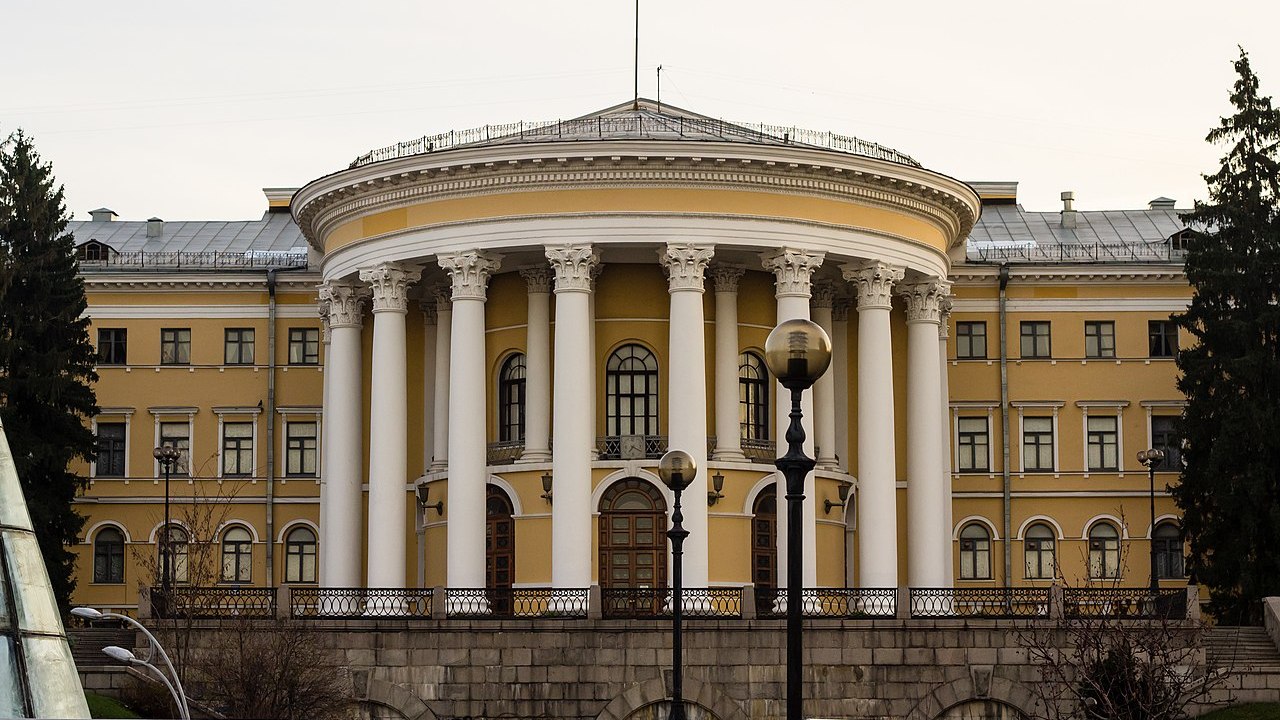
In a landmark legal decision that has captured public attention across Ukraine, a court has ruled to nationalize the October Palace, one of Kyiv’s most recognizable and historically significant buildings. The ruling effectively transfers ownership of the iconic cultural venue away from the Federation of Trade Unions of Ukraine, marking a dramatic shift in the property’s decades-long ownership structure. This decision comes amid broader efforts by Ukrainian authorities to reclaim state assets and review property arrangements that date back to the Soviet era.
The October Palace, known in Ukrainian as Zhovtnevyi Palats, stands as a prominent architectural landmark in the heart of the Ukrainian capital. Built in the early 20th century, the building has served various cultural and political functions throughout its existence, hosting concerts, conferences, and significant public events. Its central location near Independence Square, the focal point of Ukraine’s 2004 Orange Revolution and the 2013-2014 Euromaidan protests, has made it a witness to some of the most transformative moments in modern Ukrainian history.
Historical Background and Ownership Disputes
The Federation of Trade Unions of Ukraine has controlled the October Palace for many years, a legacy of the Soviet period when trade unions managed numerous cultural and recreational facilities across the USSR. Following Ukraine’s independence in 1991, many of these properties remained under trade union control, creating a complex web of ownership arrangements that successive governments have periodically sought to untangle. Critics have long argued that such properties, built with public funds during the Soviet era, should rightfully belong to the state rather than to organizations that inherited them through historical circumstance rather than legitimate purchase.
The legal battle over the October Palace reflects broader tensions in Ukrainian society regarding Soviet-era property distributions. Similar disputes have arisen over sanatoriums, recreation centers, and cultural venues throughout the country. The current government has accelerated efforts to review these arrangements, particularly in the context of wartime needs and the imperative to maximize state resources. Legal experts note that Ukrainian courts have increasingly sided with state claims in such cases, establishing precedents that could affect numerous other properties.
Implications for Cultural Heritage and Public Use
The nationalization ruling raises important questions about the future use and management of the October Palace. Supporters of the decision argue that state ownership will ensure the building serves broader public interests and receives proper maintenance and restoration. The venue has historically hosted performances by prominent Ukrainian and international artists, and its large auditorium has made it a preferred location for major cultural events. Under state control, proponents suggest, the palace could be more effectively integrated into national cultural programming and heritage preservation efforts.
However, the decision has also sparked debate about property rights and the appropriate relationship between the state and civil society organizations. Representatives of the Federation of Trade Unions have contested the ruling, arguing that their organization has legitimately managed and maintained the property for decades. They contend that the nationalization sets a concerning precedent for other organizations holding similar Soviet-era properties. The case is likely to proceed through appeals, and its ultimate resolution could take considerable time as both sides present their legal arguments.
Broader Context of Wartime Asset Management
The October Palace ruling must be understood within the broader context of Ukraine’s ongoing conflict and the government’s efforts to consolidate resources. Since the full-scale Russian invasion began in February 2022, Ukrainian authorities have undertaken various measures to strengthen state control over strategic assets and ensure efficient resource allocation. While the October Palace case may have originated before the war’s escalation, the wartime environment has undoubtedly influenced legal proceedings and public sentiment regarding state versus private or organizational ownership of significant properties.
Looking ahead, the fate of the October Palace will likely serve as a bellwether for similar cases across Ukraine. Legal analysts predict that the ruling could encourage further state claims against properties held by trade unions and other organizations dating from the Soviet period. For now, Kyiv’s residents and cultural enthusiasts await clarity on how this beloved venue will be managed and what programming it might offer under potential new state stewardship. The building’s prominent position in the city’s cultural landscape ensures that whatever happens next will be closely watched by citizens, artists, and policymakers alike.
Expert Opinion: This nationalization ruling signals a decisive shift in Ukraine’s approach to Soviet-era property arrangements, with courts increasingly favoring state claims over inherited organizational ownership. As the country continues its wartime consolidation of resources and post-war planning, we can expect similar legal challenges to accelerate, potentially affecting hundreds of properties nationwide. The October Palace case may ultimately be remembered as a turning point in Ukraine’s effort to reclaim public assets and redefine the relationship between state institutions and legacy organizations from the Soviet period.