


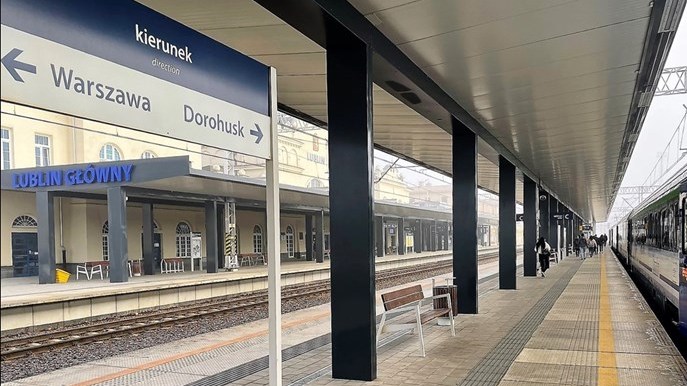
Poland’s state-owned railway operator PKP Intercity has initiated the approval process for a new international rail service connecting the capitals of Poland and Ukraine. The announcement marks a significant development in cross-border transportation infrastructure between the two neighboring countries, potentially offering travelers an alternative route for journeys between Warsaw and Kyiv. This new connection through the Dorohusk border crossing point represents another step in strengthening transportation links between the European Union and Ukraine during a period of unprecedented cooperation between the two nations.
Strategic Importance of the New Rail Connection
The proposed rail route through Dorohusk carries substantial strategic significance for both Poland and Ukraine. Dorohusk, located in the Lublin Voivodeship of eastern Poland, serves as one of the key border crossing points between the two countries. The town has historically functioned as an important gateway for both passenger and freight traffic, and the introduction of a direct intercity service would significantly enhance its role in regional connectivity. Currently, travelers between Warsaw and Kyiv have limited direct rail options, often requiring transfers or relying on bus services that can be time-consuming and less comfortable than modern rail travel.
The timing of this announcement is particularly noteworthy given the ongoing geopolitical situation in the region. Since the beginning of Russia’s full-scale invasion of Ukraine in February 2022, Poland has become the primary transit country for millions of Ukrainian refugees and has served as a crucial corridor for humanitarian aid and economic support. Rail connections have played a vital role in this effort, with Polish railways transporting countless passengers and essential supplies across the border. The establishment of additional direct routes between major cities reflects a long-term commitment to maintaining and expanding these vital links.
Technical Challenges and Infrastructure Considerations
International rail travel between Poland and Ukraine presents unique technical challenges, primarily due to the different rail gauge systems used by the two countries. Poland, like most of Western Europe, operates on the standard gauge of 1,435 millimeters, while Ukraine inherited the broader 1,520-millimeter gauge from the Soviet era. This difference traditionally required time-consuming procedures at border crossings, including either changing trains entirely or utilizing specialized equipment to swap the bogies (wheel assemblies) on passenger carriages. Modern solutions, including gauge-changing trains and improved border processing facilities, have helped reduce these delays significantly in recent years.
PKP Intercity, Poland’s primary long-distance passenger rail operator, has been actively modernizing its fleet and expanding its international offerings. The company operates numerous domestic routes across Poland and maintains connections to several European destinations. The addition of a Kyiv route would represent one of the company’s most ambitious international ventures, requiring coordination not only with Ukrainian Railways (Ukrzaliznytsia) but also with border control and customs authorities on both sides. The approval process being initiated will likely involve multiple government agencies and international agreements to ensure smooth operations.
Historical Context and Future Prospects
Rail connections between Warsaw and Kyiv have a long and complex history, reflecting the broader political relationships between Poland and the territories that now constitute Ukraine. During various historical periods, these rail links served different purposes, from facilitating trade and cultural exchange to supporting military logistics. In the post-Soviet era, direct rail services between the two capitals became symbols of renewed cooperation and friendship between independent Poland and Ukraine. The current initiative builds upon this legacy while addressing contemporary needs and expectations for comfort, speed, and reliability.
Looking ahead, the new Warsaw-Kyiv service via Dorohusk could serve as a foundation for further expansion of cross-border rail connectivity. European Union initiatives aimed at improving transportation links with Ukraine, particularly in the context of the country’s EU candidate status granted in June 2022, may provide additional funding and technical support for such projects. The European Commission has emphasized the importance of integrating Ukrainian infrastructure with EU standards, which could eventually include harmonizing rail systems and improving border crossing efficiency. For travelers and businesses alike, these developments promise faster, more convenient connections between Poland and Ukraine, contributing to economic growth and people-to-people contacts that strengthen bilateral relations.
Expert Opinion: The introduction of a new Warsaw-Kyiv rail route through Dorohusk represents a strategic investment in post-war connectivity infrastructure that will become increasingly valuable as Ukraine moves toward EU integration. Transportation analysts anticipate that demand for reliable cross-border rail services will continue growing, making early investment in route development and modern rolling stock essential for capturing this expanding market. This initiative may also catalyze broader European investment in Ukraine’s rail modernization, potentially accelerating the eventual transition to standard gauge on key international corridors.