


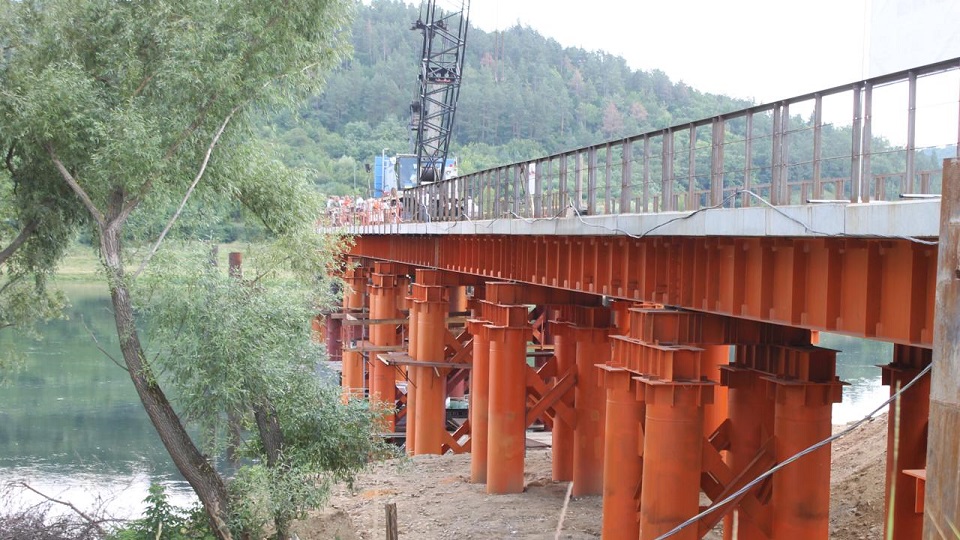
Construction has begun on a bridge crossing leading to the future international checkpoint “Yampil – Cosăuți” between Ukraine and Moldova, but contrary to earlier announcements about a modern permanent structure, workers are now assembling a temporary pontoon-style crossing. This development has raised questions among local residents and observers who were expecting a full-scale bridge project that would significantly improve cross-border connectivity between the two neighboring nations.
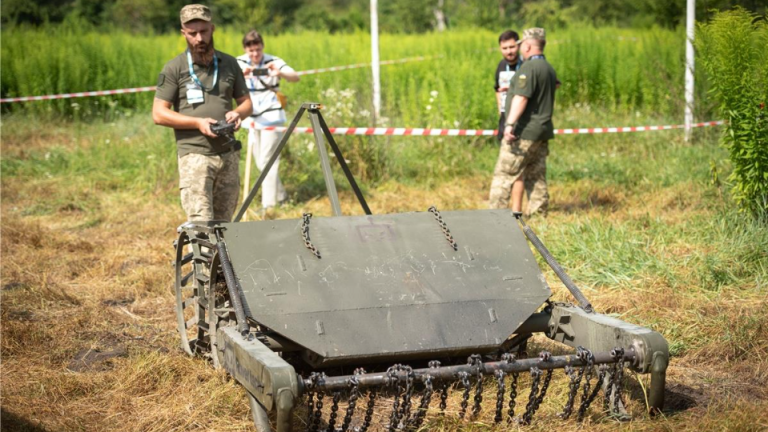
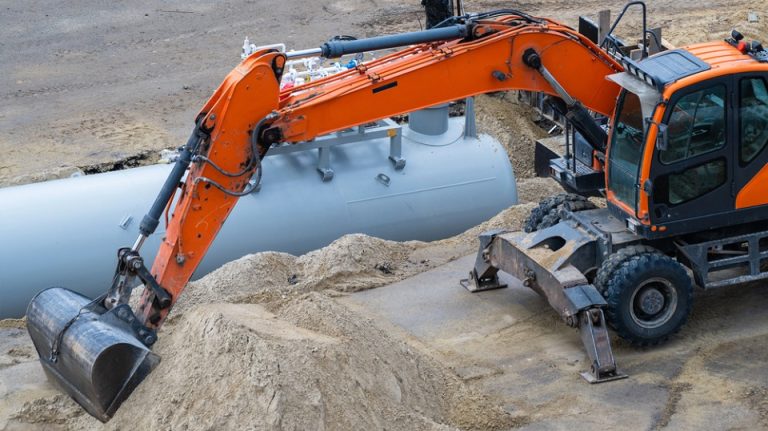
The photographs emerging from the construction site show engineering crews working on what appears to be a modular or floating bridge structure rather than the substantial permanent crossing that had been discussed in previous governmental communications. This temporary solution, while functional, represents a departure from the ambitious infrastructure plans that were originally presented to the public.
Strategic Importance of the Yampil-Cosăuți Corridor
The Yampil-Cosăuți crossing point holds significant strategic and economic importance for both Ukraine and Moldova. Located along the Dniester River, which forms a natural border between the two countries for a considerable stretch, this corridor has long been identified as a critical infrastructure gap. Currently, cross-border movement in this region is limited, forcing travelers and commercial traffic to use alternative routes that add considerable time and expense to their journeys.
For Moldova, improved connectivity with Ukraine represents a vital lifeline, particularly given the country’s complex geopolitical situation and its aspirations for European integration. The Dniester River has historically served as both a natural boundary and a barrier to regional economic development. Modern crossing infrastructure could transform this area into a thriving commercial corridor, benefiting communities on both sides of the border.
Historical Context and Previous Bridge Discussions
Plans for improved crossings over the Dniester River between Ukraine and Moldova have been discussed for many years, with various proposals coming and going depending on political circumstances and available funding. The relationship between the two countries has generally been cooperative, with both nations sharing historical and cultural ties while facing similar challenges in their post-Soviet development paths.
Infrastructure projects along this border have often been complicated by the presence of the breakaway region of Transnistria, which controls a section of Moldova’s eastern territory along the Dniester. However, the Yampil-Cosăuți location is situated in an area that avoids these complications, making it an ideal candidate for improved bilateral infrastructure. Previous administrations in both countries have recognized this potential, though concrete progress has been slow to materialize.
Temporary Solutions in Wartime Conditions
The decision to construct a temporary crossing rather than a permanent bridge likely reflects the current wartime conditions affecting Ukraine. Since the full-scale Russian invasion began in February 2022, Ukraine has faced enormous pressure on its infrastructure, budget, and construction capacity. Major permanent infrastructure projects require significant planning, resources, and time that may not be available under current circumstances.
Temporary or modular bridge solutions offer several advantages in this context. They can be deployed relatively quickly, require fewer resources, and can be replaced or upgraded when conditions permit. Military engineering units have extensive experience with such crossings, and the technology has advanced considerably in recent decades. While not as durable or capable as permanent structures, modern temporary bridges can handle substantial traffic loads and remain functional for extended periods.
Implications for Regional Development
Despite the disappointment that may accompany the revelation of a temporary rather than permanent crossing, the construction activity itself represents forward progress on an important infrastructure link. Any functional crossing at this location will improve connectivity and potentially stimulate economic activity in the region. Local communities on both sides of the border stand to benefit from improved access to markets, services, and opportunities.
The temporary nature of the current construction does not necessarily preclude future development of a permanent bridge. Indeed, establishing a functioning checkpoint and demonstrating traffic demand could strengthen the case for future investment in permanent infrastructure once conditions permit. Both Ukraine and Moldova have expressed commitment to European integration, which typically involves substantial infrastructure development along international corridors.
Expert Opinion: The shift from a promised permanent bridge to a temporary crossing reflects the pragmatic realities facing Ukraine during wartime, where rapid deployment of functional infrastructure takes precedence over long-term construction projects. This approach allows both countries to establish the critical border crossing point now while preserving the option for permanent development post-conflict. Observers should view this as a foundation-building exercise rather than a broken promise, as the temporary structure serves to validate traffic patterns and operational requirements that will inform future permanent construction.