



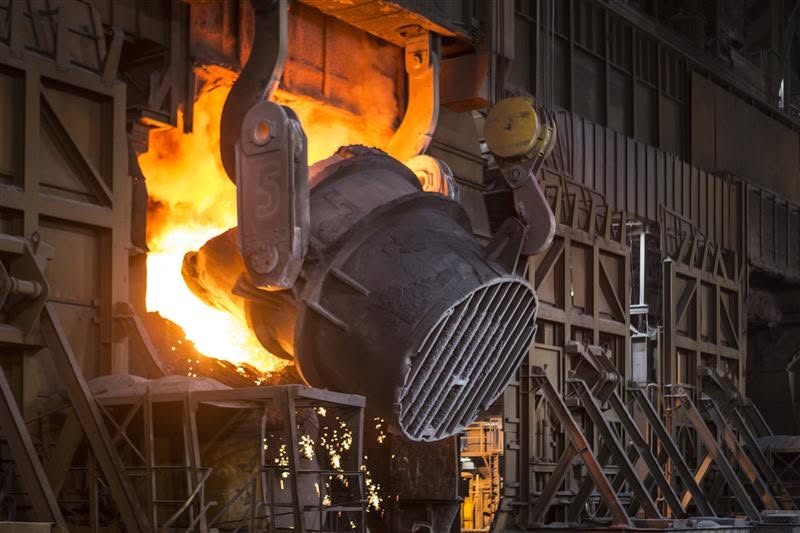
In a landmark decision that marks a significant shift in British industrial policy, the UK government has taken control of British Steel following threats by its Chinese owner to shut down the company’s blast furnaces. The nationalization represents one of the most dramatic state interventions in British industry in decades, signaling the government’s commitment to preserving domestic steel production capacity and protecting thousands of jobs in communities that have relied on steelmaking for generations.
The move comes after prolonged negotiations between the British government and Jingye Group, the Chinese conglomerate that acquired British Steel in 2020, broke down over disagreements about the future direction of the company. Jingye had threatened to close the blast furnaces at the Scunthorpe plant in Lincolnshire, which would have resulted in the loss of approximately 2,700 direct jobs and thousands more in the supply chain. Business Secretary Jonathan Reynolds described the nationalization as necessary to protect strategic national interests and preserve critical steelmaking capabilities.
A Century of British Steelmaking Under Threat
British Steel’s roots stretch back to the foundation of the British steel industry, which played a pivotal role in the nation’s industrialization and economic development. The company operates one of the last remaining integrated steelworks in the United Kingdom, producing steel from raw materials using traditional blast furnace technology. The Scunthorpe works has been a cornerstone of the local economy for over 150 years, with generations of families dedicating their working lives to the plant. The potential closure would have devastated the community, where steel production remains the primary employer and economic driver.
The nationalization marks a reversal of the privatization wave that swept through British industry in the 1980s and 1990s. British Steel was originally nationalized in 1967 when the Labour government merged fourteen major steel companies to form the British Steel Corporation. It was subsequently privatized in 1988 under Margaret Thatcher’s Conservative government. Since then, the company has changed hands multiple times, reflecting the volatile nature of the global steel industry and the challenges facing European steelmakers competing against cheaper imports from Asia.
Strategic Implications and Energy Transition Challenges
The decision to nationalize British Steel reflects growing concerns about national security and supply chain resilience in critical industries. Steel remains essential for construction, infrastructure, defense, and manufacturing, and the COVID-19 pandemic exposed vulnerabilities in global supply chains that have prompted governments worldwide to reconsider their industrial strategies. The UK currently imports approximately 60 percent of its steel needs, a dependency that policymakers increasingly view as strategically problematic.
A central challenge facing British Steel involves the transition from carbon-intensive blast furnace technology to greener production methods. Traditional blast furnaces rely on coal-derived coke to reduce iron ore, producing significant carbon dioxide emissions. The steel industry accounts for roughly 7-8 percent of global carbon emissions, making decarbonization essential for meeting climate targets. The government has indicated plans to invest in electric arc furnace technology, which uses recycled scrap steel and produces far lower emissions, though critics argue this approach cannot fully replicate the volume and quality of virgin steel production.
Political and Economic Ramifications
The nationalization has sparked intense political debate about the proper role of government in the economy. Supporters argue that strategic industries require state protection, particularly during periods of transition and global uncertainty. They point to successful examples of state intervention in other European countries, where governments have actively supported steel industries through various mechanisms. Critics, however, express concern about the cost to taxpayers and question whether government ownership can deliver the efficiency and innovation needed for long-term viability.
Industry analysts estimate that modernizing British Steel’s operations could require investments of several billion pounds over the coming decade. The government has committed to developing a comprehensive plan for the company’s future, including discussions with potential private sector partners who might eventually take over operations once the transition to cleaner technology is complete. Trade unions have welcomed the nationalization while calling for guarantees about job security and investment in worker retraining programs to ensure employees can adapt to new production methods.
Expert Opinion: This nationalization signals a broader recalibration of industrial policy across Western economies, where strategic autonomy is increasingly prioritized over pure market efficiency. The success of this intervention will depend critically on the government’s willingness to commit substantial long-term capital for green steel technology, and could establish a template for managing the decarbonization of other heavy industries. Expect similar state interventions across Europe as nations grapple with the twin pressures of climate transition and geopolitical supply chain concerns.